
Introduction
India is a land of diverse cultures, languages, and religions, where faith has always shaped society and history. Among the world’s major religions, Christianity in Indian history occupies a unique place. Though Christianity is often associated with Western missionaries and colonial rule, its roots in India go back almost two millennia. Tradition holds that St. Thomas the Apostle himself brought Christianity to the Malabar Coast in the 1st century CE. Since then, the religion has intertwined with India’s cultural, political, and social fabric, leaving a profound legacy.
This article explores the origin, evolution, struggles, contributions, and contemporary significance of Christianity in India. It examines how Christianity adapted to local traditions, how it influenced education and social reform, and how Christian communities continue to shape Indian society today.
Early Arrival of Christianity in India
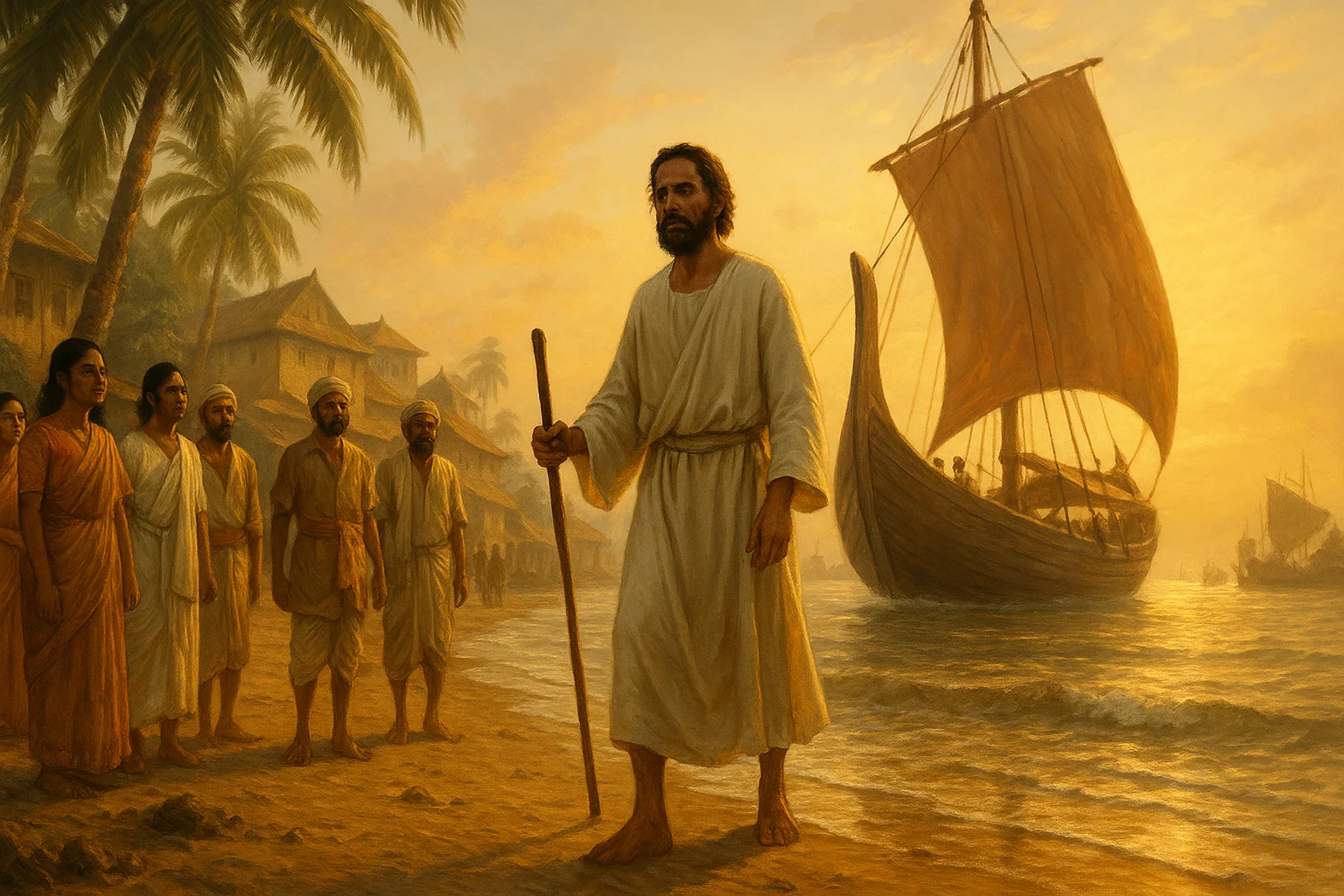
- Thomas the Apostle (52 CE):
According to ancient tradition preserved among the St. Thomas Christians of Kerala, the Apostle Thomas landed at Muziris (present-day Kodungallur) in 52 CE. He preached the gospel, established Christian communities, and is said to have been martyred near Mylapore (Chennai). - Integration with Local Culture:
These early Christians, often called Nasranis, adopted local customs, languages, and caste-like structures while retaining their distinct faith. They used Syriac liturgy, connecting them with the East Syrian Church (Persian Christian tradition). - Trade and Christianity:
Indian Ocean trade routes facilitated cultural exchange. Syrian merchants and missionaries strengthened Christian roots in Kerala, ensuring that Indian Christianity remained an ancient and indigenous tradition long before European colonization.
Medieval Period and Christian Diversity
- Syrian Christian Expansion:
Between the 4th and 9th centuries, Christianity in India flourished through contact with the Persian Church of the East. Indian Christians followed Nestorian traditions, blending Indian and Persian influences. - Arrival of European Christians (13th Century):
- Marco Polo (1292) documented Christian communities in India.
- Franciscan missionaries reached India before Portuguese colonization but had limited success.
- Christian Identity in Pre-Colonial India:
By the 15th century, Indian Christianity was divided into two main streams: the ancient Thomas Christians of Kerala and small Christian communities in other coastal regions.
Portuguese Colonization and Latin Christianity (16th Century)
- Vasco da Gama (1498): The Portuguese arrival opened a new chapter in Indian Christianity.
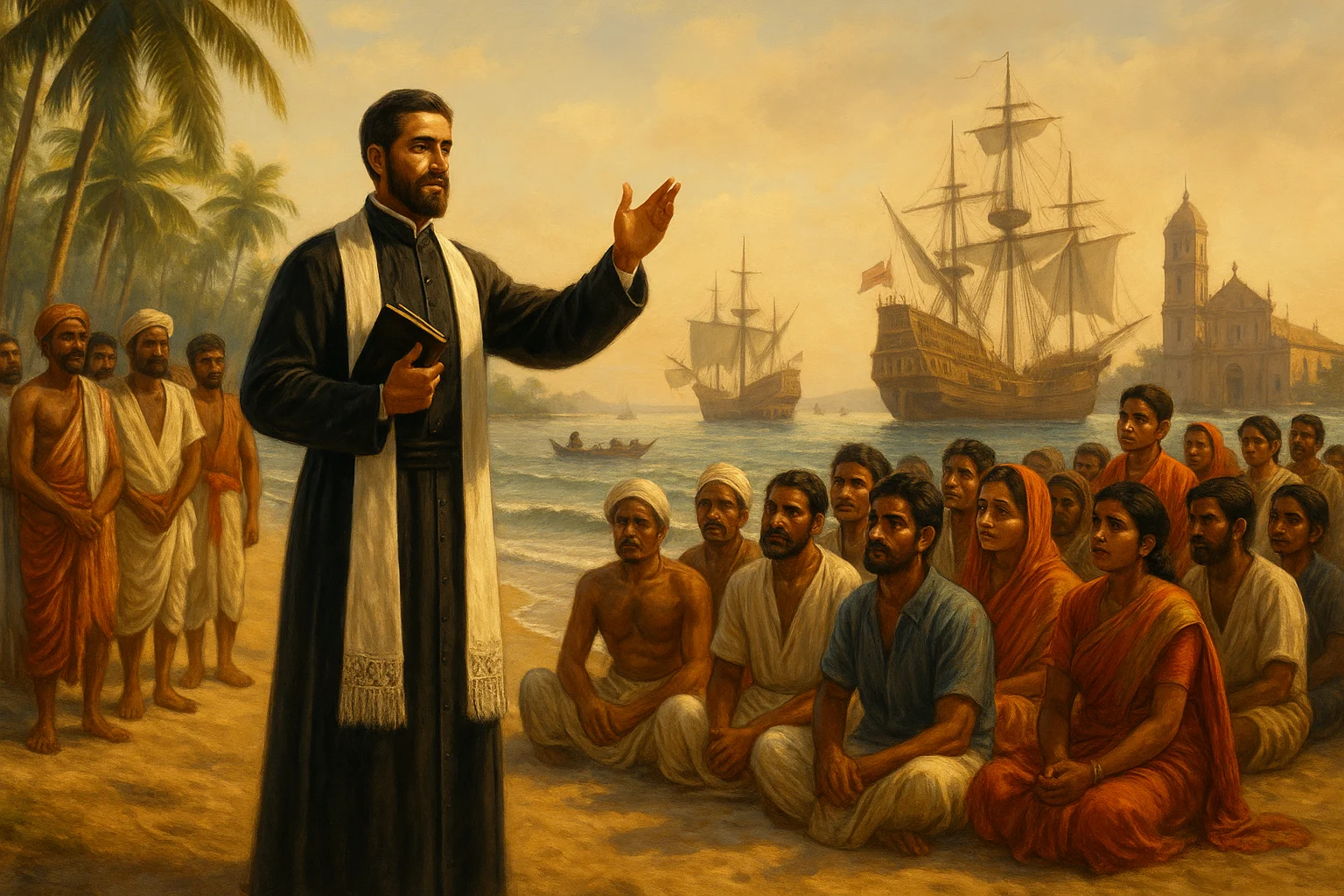
- Missionaries like Francis Xavier: The Jesuit missionary Francis Xavier worked in Goa and South India, converting thousands, especially among fisherfolk and lower castes.
- Goa as Christian Hub: Goa became the center of Latin Christianity in India, with churches, seminaries, and the famous Basilica of Bom Jesus, housing the remains of St. Francis Xavier.
- Conflicts with Syrian Christians: The Portuguese attempted to impose Latin Catholic traditions on ancient Syrian Christians, leading to tensions. The famous Coonan Cross Oath (1653) marked the resistance of Syrian Christians against Latin dominance.
British Colonial Era and Protestant Missions (18th–19th Century)
- Arrival of Protestant Christianity:
With British rule came Anglican and Protestant missionaries, particularly from the Church Missionary Society and London Missionary Society. - Contributions to Education:
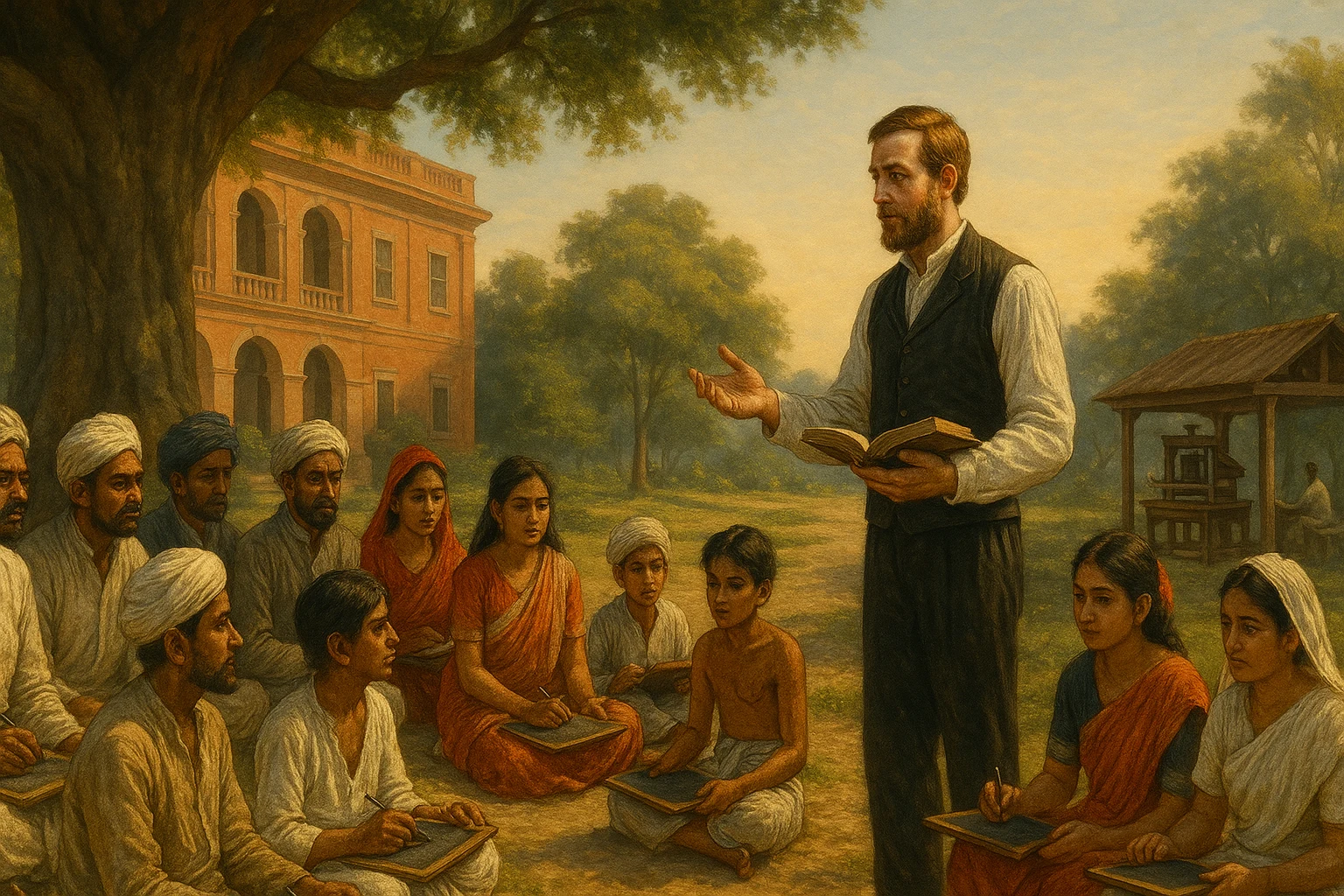
Missionaries established some of India’s leading educational institutions:- Serampore College (founded by William Carey)
- Madras Christian College
- Stephen’s College, Delhi
- Scottish Church College, Kolkata
- Role in Social Reform:
Missionaries contributed to movements against sati, caste discrimination, and untouchability. They advocated women’s education, printing presses, and translation of the Bible into Indian languages. - Conversions and Criticism:
While many lower-caste communities embraced Christianity for social liberation, conversions also led to friction with Hindu and Muslim groups. Critics accused missionaries of linking education and social welfare to proselytization.
Christianity and Indian Freedom Struggle
- Christian Leaders in Nationalism:
Christians actively participated in India’s independence movement. Leaders like T. Paul, V. S. Azariah, and later K. K. Kuruvilla contributed to social reforms and nation-building. - Balancing Faith and Nationalism:
While some Christians aligned with the British, many Indian Christians supported the freedom struggle, emphasizing their loyalty to India rather than colonial rulers.
Post-Independence Christianity in India
- Constitutional Protection:
The Indian Constitution guarantees freedom of religion, ensuring Christians could freely practice, preach, and propagate their faith. - Christian Institutions:
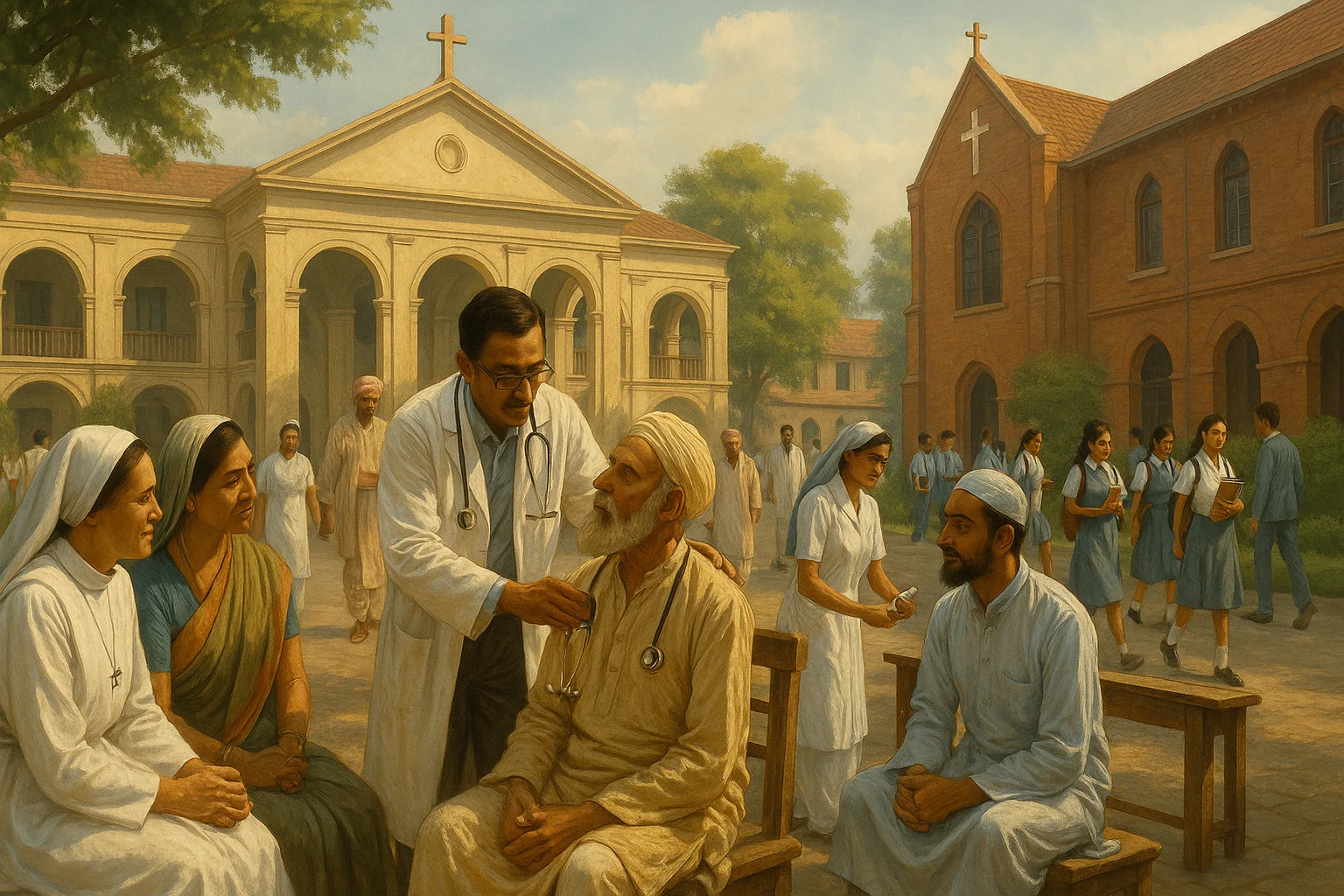
Indian Christians run prestigious schools, colleges, hospitals, and NGOs across the country. Institutions like CMC Vellore, John’s Medical College, and countless missionary schools continue to shape India’s education and healthcare. - Population and Demographics:
According to census data, Christians make up about 3% of India’s population, with significant communities in Kerala, Goa, Northeast India (Nagaland, Mizoram, Meghalaya), and coastal regions. - Challenges:
Indian Christians sometimes face social discrimination, political suspicion, and violence. Despite this, they remain one of the most active contributors to India’s education, healthcare, and social service.
Christianity in Northeast India
- Missionary Success:
In the 19th and 20th centuries, missionaries found remarkable success in Northeast India, especially among tribal communities. Today, Nagaland, Mizoram, and Meghalaya have Christian majorities. - Impact on Culture:
Christianity helped preserve tribal languages and promoted literacy. Hymns, church-based social organizations, and democratic church structures deeply influenced tribal societies.
Cultural and Artistic Contributions
- Architecture: Magnificent churches like Francis Church (Kochi), San Thome Basilica (Chennai), and Velankanni Basilica (Tamil Nadu) reflect India’s Christian heritage.
- Art and Literature: Christian missionaries developed grammar and dictionaries of Indian languages, printed literature, and inspired Christian devotional poetry.
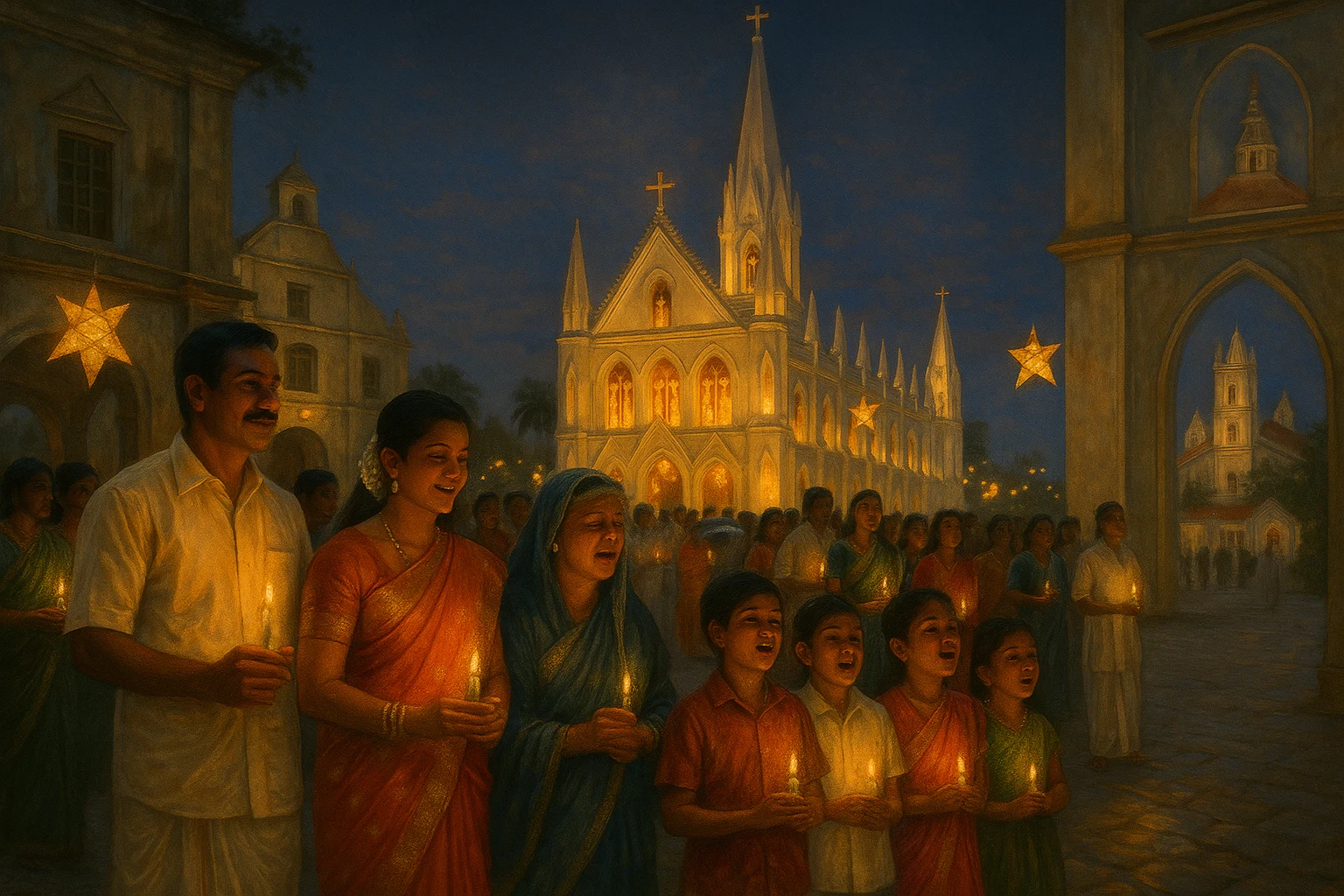
- Festivals: Indian Christians celebrate Christmas, Easter, Good Friday, and harvest festivals like Onam (with a Christian flavor in Kerala).
Christianity and Indian Society Today
- Interfaith Relations: Christianity continues to engage in dialogue with Hinduism, Islam, Buddhism, and Sikhism. The spirit of pluralism and coexistence defines Indian Christianity.
- Social Service: Christian-run schools and hospitals often serve people of all religions, embodying inclusivity.
- Modern Challenges: Accusations of forced conversions, rising religious polarization, and identity struggles pose challenges. Yet, Christianity remains deeply rooted in Indian soil.
Conclusion
Christianity in Indian history is not a foreign implant but an integral part of India’s diverse religious landscape. From St. Thomas in the 1st century CE to modern Christian communities, it has contributed immensely to India’s education, healthcare, social reforms, literature, and cultural pluralism.
Its story is one of adaptation, resilience, and service. Indian Christianity reflects both global connections and deep local roots, reminding us that India’s strength lies in its ability to nurture multiple faiths within one civilization.































Receive Stories and Articles in your Inbox!
We won’t send any promotional or spam emails.
