
Introduction: The Spirit of Durga Puja in Bengal
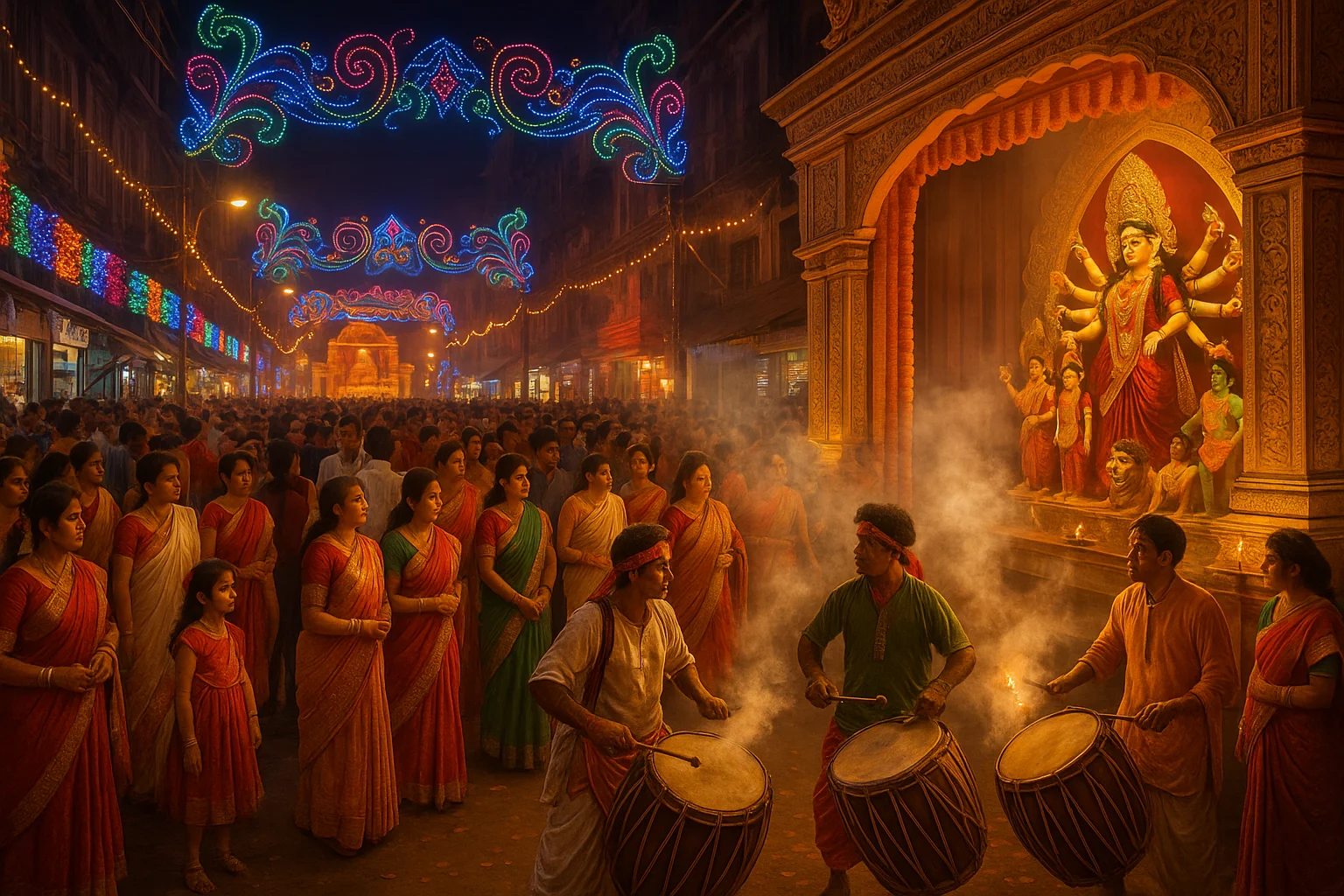
Durga Puja, often referred to as the “festival of festivals” in Bengal, is more than just a religious event. It is a magnificent amalgamation of faith, art, community bonding, and cultural expression. Celebrated with unmatched grandeur, Durga Puja brings the entire state of West Bengal, especially Kolkata, alive with vibrant lights, artistic pandals, rhythmic dhak beats, and the fragrance of incense. For Bengalis across the world, Durga Puja is not just a ritual—it is an emotion, a way of life, and a deep connection to their roots.
This article explores the history, rituals, cultural dimensions, economic impact, and global influence of Durga Puja in Bengal in over 1000 words, providing a comprehensive view of why this festival is so special.
Historical Origins of Durga Puja in Bengal
The worship of Goddess Durga in Bengal dates back several centuries. Early references suggest that Durga Puja was first organized by wealthy landlords (zamindars) during the late medieval period. Historical records mention that the first community Durga Puja was celebrated in the late 16th century in Dinajpur and Malda.
By the 18th century, Durga Puja had become an essential part of Bengali social and cultural life. The Puja organized by Raja Nabakrishna Deb of Shobhabazar Rajbari in Kolkata in 1757 is considered a milestone, as it combined devotion with aristocratic grandeur. Over time, Durga Puja transformed from being a celebration of the elite to a festival of the masses.
Mythological Significance
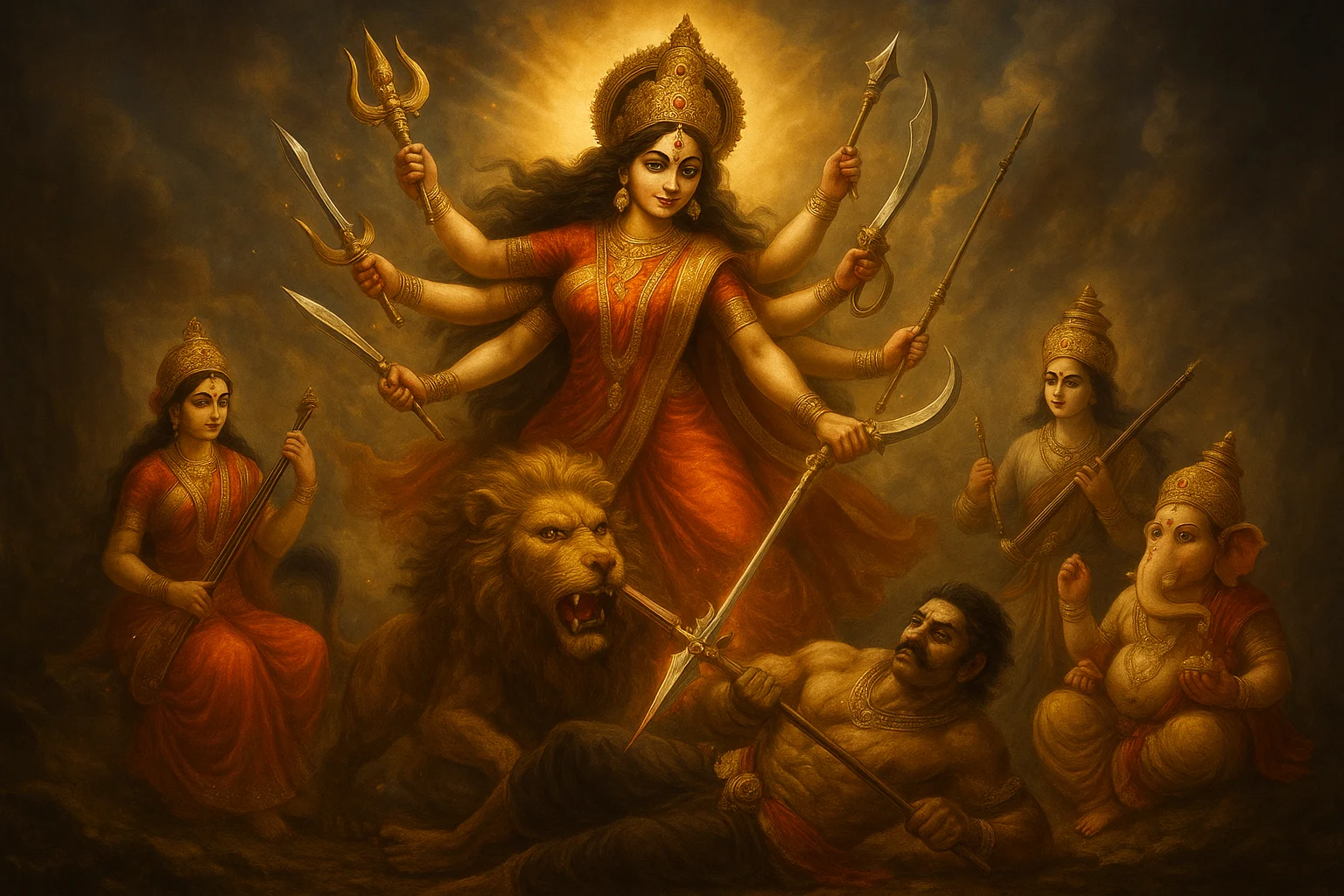
Durga Puja celebrates the victory of Goddess Durga over the demon Mahishasura, symbolizing the triumph of good over evil. The ten-armed goddess, mounted on a lion, represents power, righteousness, and protection. Each weapon she carries has symbolic importance—reflecting divine powers bestowed upon her by other gods to defeat evil.




















For Bengalis, the arrival of Durga is not only a mythological story but also an emotional homecoming. She is worshipped as the daughter returning to her paternal home with her children—Lakshmi, Saraswati, Kartik, and Ganesha—bringing joy and prosperity to her devotees.
Rituals of Durga Puja
Durga Puja typically spans over ten days, beginning with Mahalaya and culminating in Vijaya Dashami.
1. Mahalaya
The festival begins with Mahalaya, which marks the invocation of Goddess Durga. At dawn, radio broadcasts of Birendra Krishna Bhadra’s Chandipath echo in homes, setting the festive mood.
2. Shashthi
The goddess is welcomed to her earthly abode. Pandals open for public viewing, and the idols are unveiled with great anticipation.
3. Saptami
The ritual of Nabapatrika (nine plants tied together) is performed, symbolizing the goddess’s presence in nature.
4. Ashtami
Considered the most sacred day, it features Kumari Puja and Sandhi Puja. Devotees throng pandals in their finest attire to offer prayers.
5. Navami
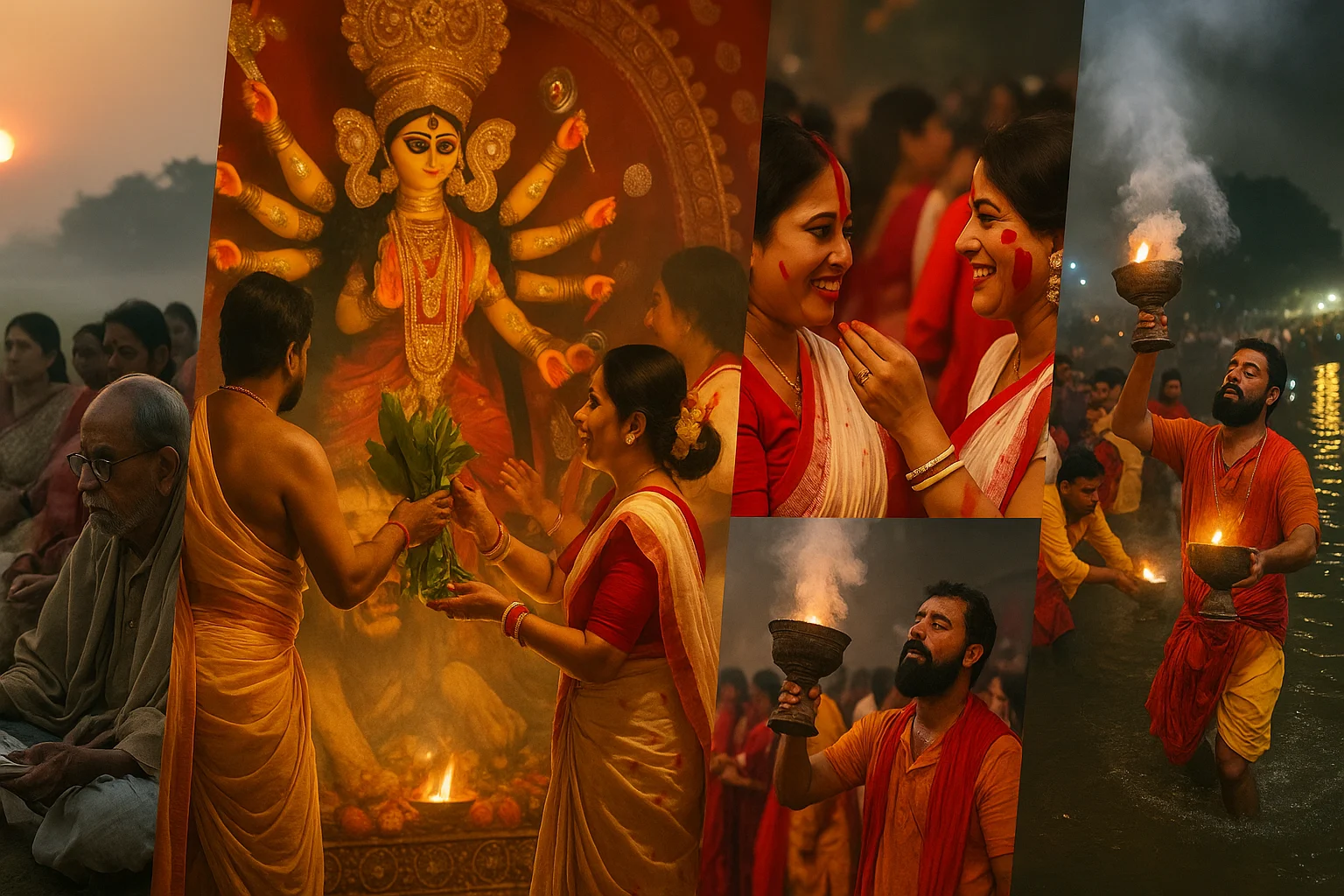
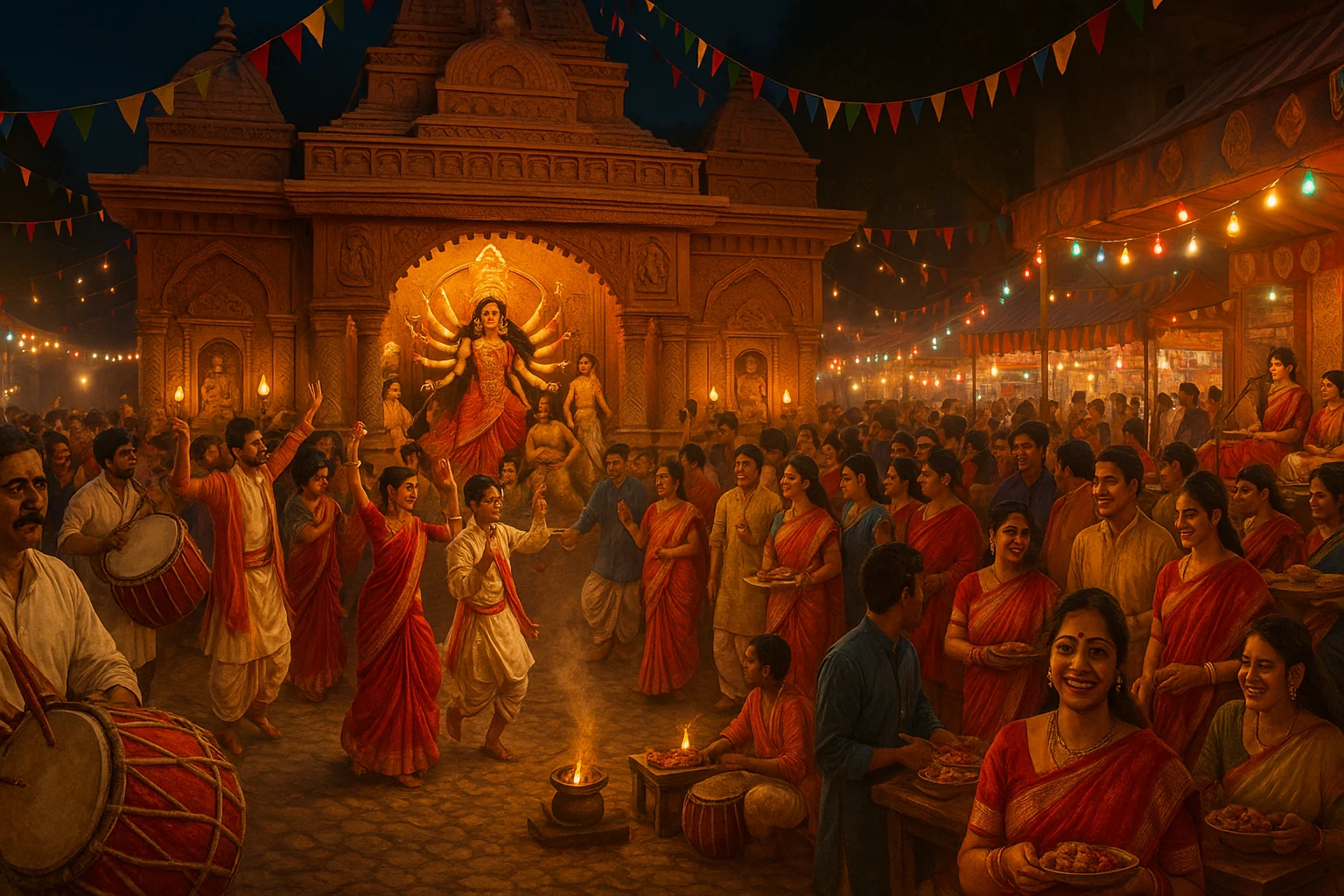
Offerings of bhog, dhunuchi naach (dance with incense burners), and cultural programs dominate the day.
6. Dashami (Vijaya Dashami)
The immersion (Visarjan) of the idol takes place, marking the goddess’s return to her heavenly abode. Women smear vermilion (Sindoor Khela) on each other, and families exchange festive greetings, signifying new beginnings.
Cultural Dimensions of Durga Puja
Durga Puja is not limited to rituals—it is an explosion of culture.
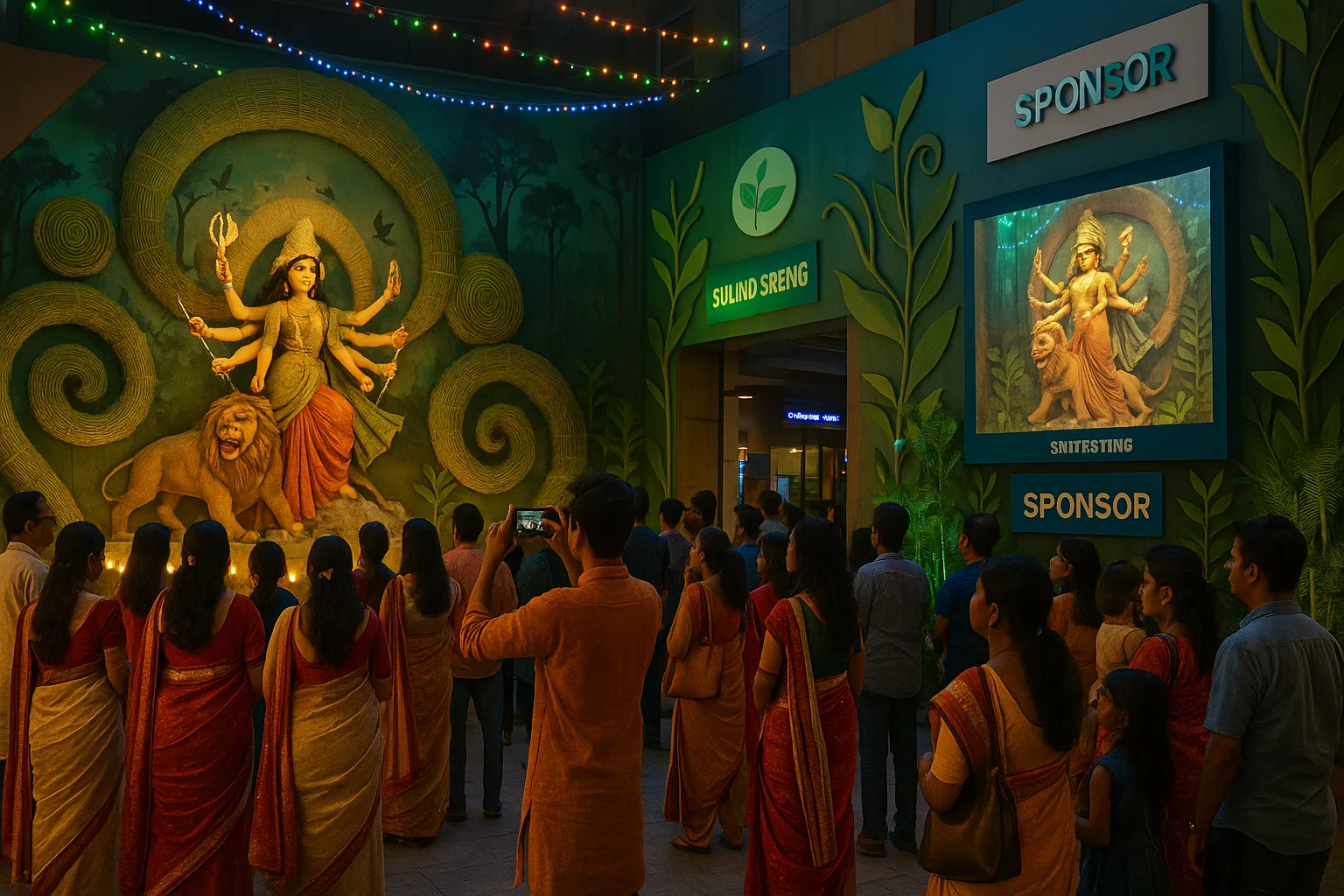
- Art and Creativity: Pandals showcase extraordinary artistry, often themed around global heritage, contemporary issues, or traditional motifs. From replicas of temples to eco-friendly designs, creativity knows no bounds.
- Music and Dance: The beats of the dhak, conch shells, Rabindra Sangeet performances, and folk dances enrich the atmosphere.
- Fashion: Traditional attire—sarees, dhotis, and kurta-pajamas—define the festive look. For many, it is a time to showcase Bengal’s rich textile heritage.
- Food: Food stalls serve Bengali delicacies like luchi-alur dom, fish curry, mutton biryani, mishti doi, and rosogolla, making Puja a feast for food lovers.
Durga Puja as a Community Festival
Durga Puja is perhaps the largest community festival in Bengal. The concept of Barowari Puja (community puja) emerged in the 18th century and continues today. Clubs and neighborhoods pool resources to organize grand celebrations, creating unity among people from different backgrounds.
The festival also fosters inclusivity—people of all religions participate, showcasing Bengal’s communal harmony. It is a time when social barriers dissolve, and collective joy takes center stage.
Economic and Social Impact
Durga Puja has a massive economic footprint in Bengal.
- Employment: Idol makers (kumartuli artisans), pandal decorators, electricians, caterers, and performers earn livelihoods during this period.
- Tourism: Domestic and international tourists flock to Kolkata and other cities to witness the grandeur.
- Business: The festive season boosts retail, fashion, and food industries. Shopping for new clothes is a must for every household.
- UNESCO Recognition: In 2021, UNESCO inscribed Durga Puja in Kolkata on the Representative List of the Intangible Cultural Heritage of Humanity, recognizing its global cultural significance.
Durga Puja in Modern Times
Over the years, Durga Puja has embraced modernization while retaining traditions.
- Theme Pandals: Modern pujas adopt themes highlighting social issues like climate change, women empowerment, or education.
- Eco-Friendly Celebrations: With rising environmental awareness, many committees use biodegradable materials for idols and avoid harmful paints.
- Digital Reach: Live streaming of major pujas allows Bengalis worldwide to participate virtually.
- Corporate Sponsorships: Brands sponsor pandals, merging culture with commerce.
Durga Puja Beyond Bengal
Durga Puja has transcended Bengal’s borders. Bengali communities in Delhi, Mumbai, Bengaluru, London, New York, and Singapore celebrate with equal zeal. These global celebrations keep the diaspora connected to their cultural roots and spread Bengal’s traditions worldwide.
Emotional and Social Connect
For Bengalis, Durga Puja is deeply personal. It is a time for family reunions, adda sessions with friends, and nostalgia for childhood memories. Even those living abroad plan visits to coincide with Puja. It creates a sense of belonging and pride in Bengali identity.
Challenges and Future of Durga Puja
Despite its grandeur, Durga Puja faces challenges:
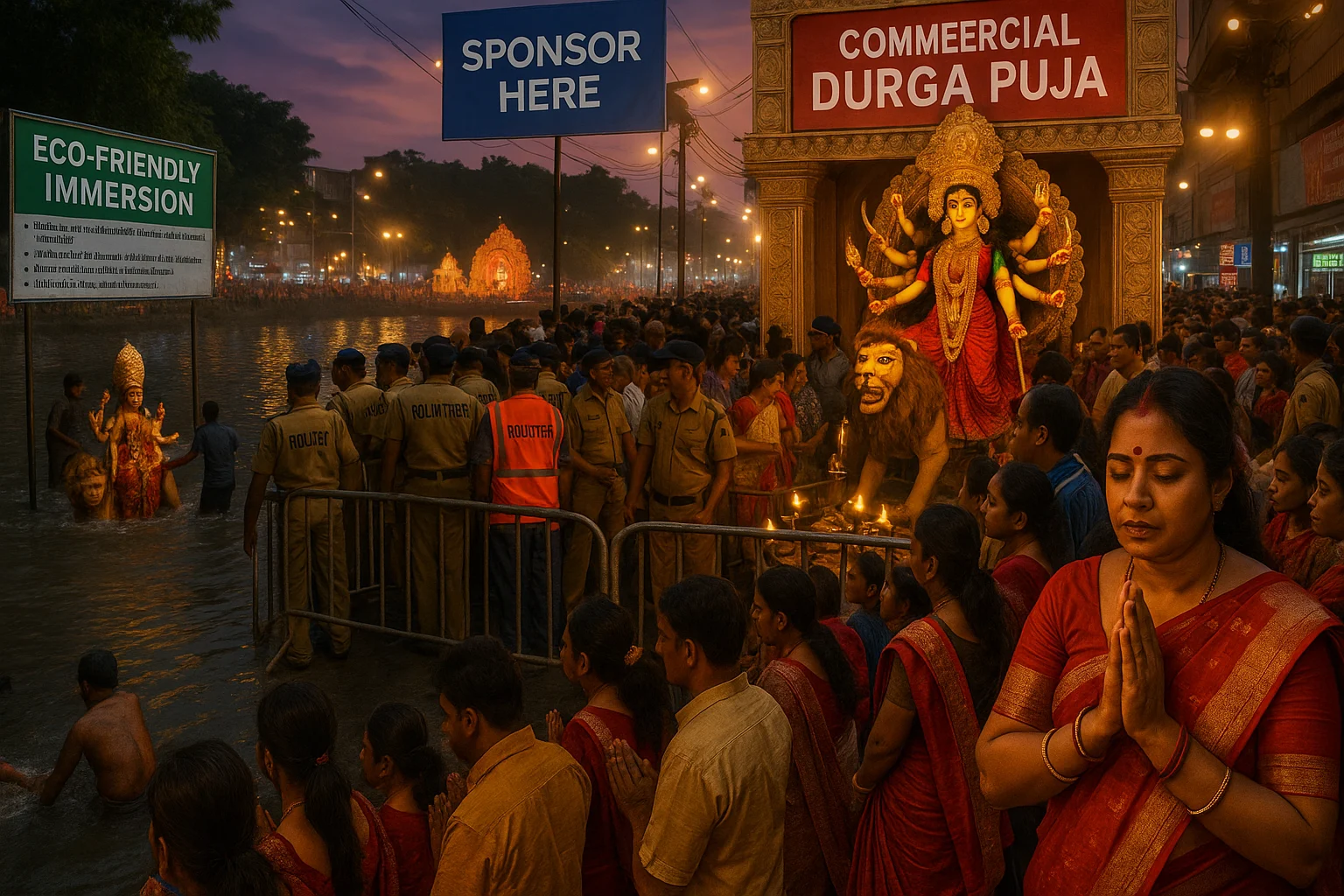
- Environmental Concerns: Immersion of idols in rivers causes pollution, though eco-friendly practices are slowly gaining ground.
- Commercialization: Some critics argue that excessive corporate involvement dilutes spiritual essence.
- Crowd Management: Managing millions of visitors in Kolkata alone poses logistical issues.
The future of Durga Puja lies in balancing tradition with sustainability and inclusivity.
Conclusion
Durga Puja in Bengal is not merely a festival—it is a cultural phenomenon. It unites people, inspires artists, drives the economy, and preserves traditions while adapting to modern values. The rhythm of dhak, the glow of pandals, the joy of sindoor khela, and the emotional immersion of the goddess—all symbolize the eternal spirit of Bengal.
Durga Puja reflects the Bengali way of life: vibrant, resilient, artistic, and deeply spiritual. It remains one of India’s most spectacular celebrations, cherished by millions across the globe.
Receive Stories and Articles in your Inbox!
We won’t send any promotional or spam emails.
