
Introduction
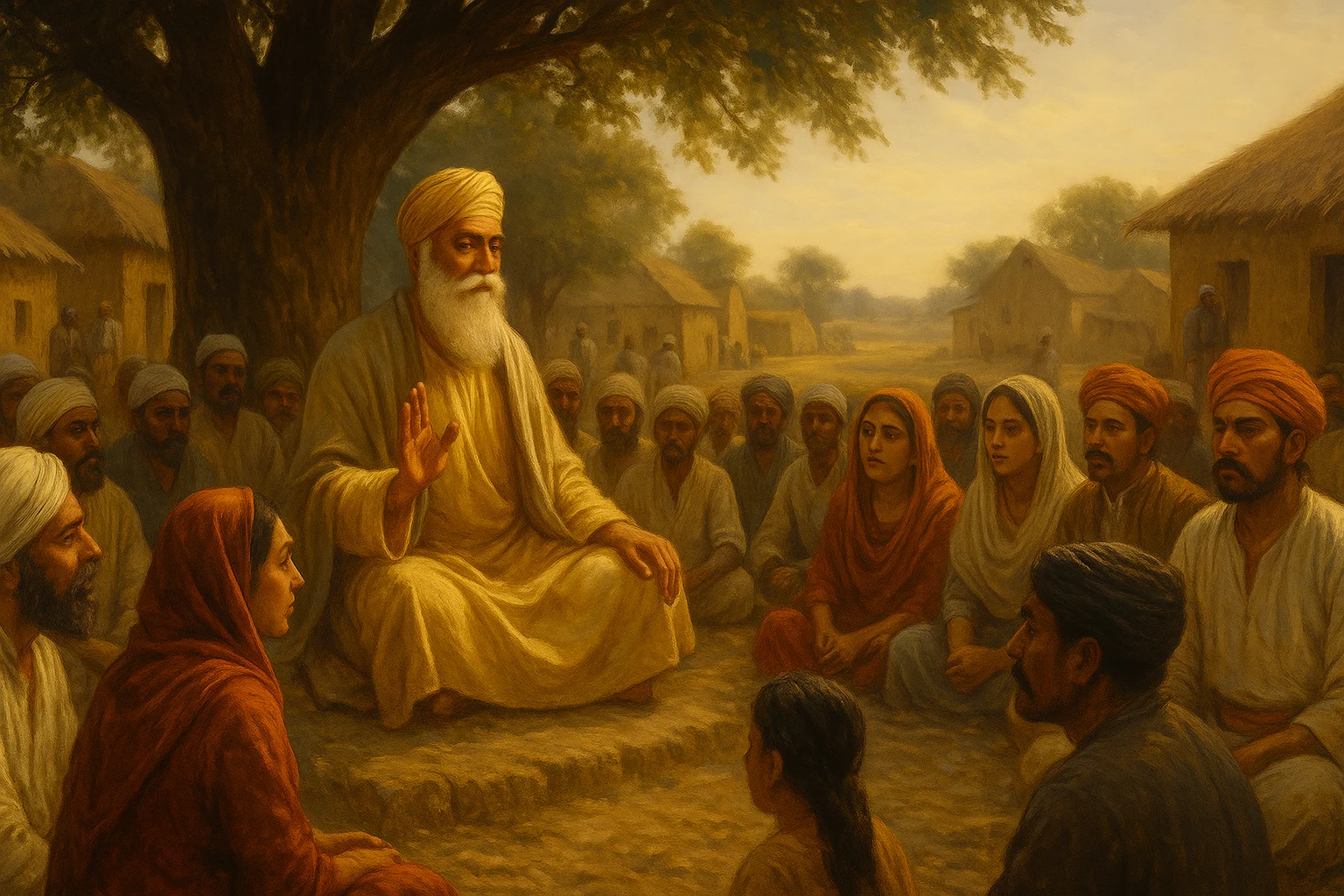
In the late 15th century, amidst a world fractured by caste hierarchies, religious divisions, and social inequality, Guru Nanak Dev Ji (1469–1539), the founder of Sikhism, emerged as a revolutionary spiritual leader. His teachings were not confined to theology; they were a call for social transformation. Equality was not just a principle in his doctrine but a lived reality that shaped Sikh practice, institutions, and community life.
Guru Nanak’s vision of equality remains profoundly relevant even today as the modern world continues to grapple with discrimination, inequality, and exclusion. His message serves as a guiding light toward a just, compassionate, and inclusive society.
Historical Context
During Guru Nanak’s time, Indian society was deeply stratified by caste. The “upper” castes monopolized power, education, and privilege, while the “lower” castes faced humiliation, untouchability, and systemic oppression. Women were confined to domestic roles, often denied dignity, education, and participation in religious life.
Religion, too, had become an arena of ritualism, with social superiority often determined by birth, not by character or virtue. Guru Nanak challenged these norms head-on by proclaiming the fundamental truth: Ik Onkar – There is One God, and all are equal before Him.
Core Teachings on Equality
1. Oneness of Humanity
Guru Nanak taught that all humans, regardless of caste, creed, gender, or social status, are equal in the eyes of the Divine. His verse in the Guru Granth Sahib declares:













































“There is no Hindu, there is no Muslim. All are children of the same God.”
This radical statement dismantled religious superiority and created a spiritual democracy.
2. Rejection of Caste System
He denounced caste barriers, emphasizing human dignity over birth. By rejecting caste-based discrimination, he laid the foundation of a society where one’s worth is measured by deeds, not by lineage.
3. Equality of Women
At a time when women were marginalized, Guru Nanak elevated their status. He questioned patriarchy with his famous words:
“Why call her inferior, from whom kings are born?”
This was a bold affirmation of gender equality, centuries ahead of its time.
4. Equality through Shared Living – Langar
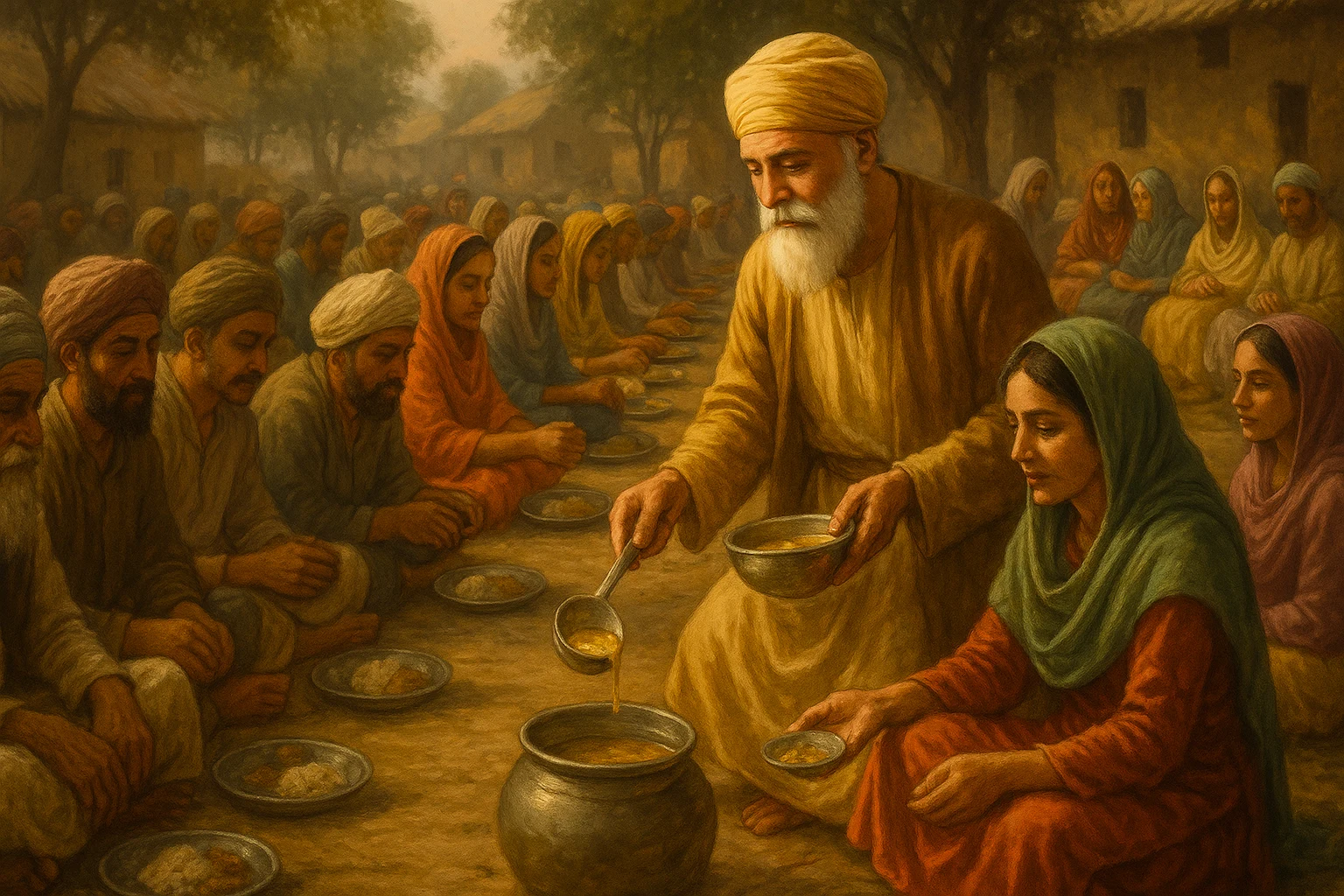
One of the most transformative institutions Guru Nanak initiated was the Langar (community kitchen). Here, all sat together—rich or poor, Hindu or Muslim, upper or lower caste—and shared meals without distinction. Langar remains one of the most visible embodiments of his egalitarian vision.
5. Equality in Work – Kirat Karo, Naam Japo, Vand Chhako
His principles emphasized earning an honest living, meditating on God, and sharing with others. This triad ensured dignity of labor and redistribution of resources, reinforcing equality in practice.
Guru Nanak’s Vision in Practice
1. Sangat and Pangat
- Sangat (holy congregation) brought together people from diverse backgrounds.
- Pangat (eating together) broke social barriers, teaching humility and inclusivity.
2. Travel and Dialogue
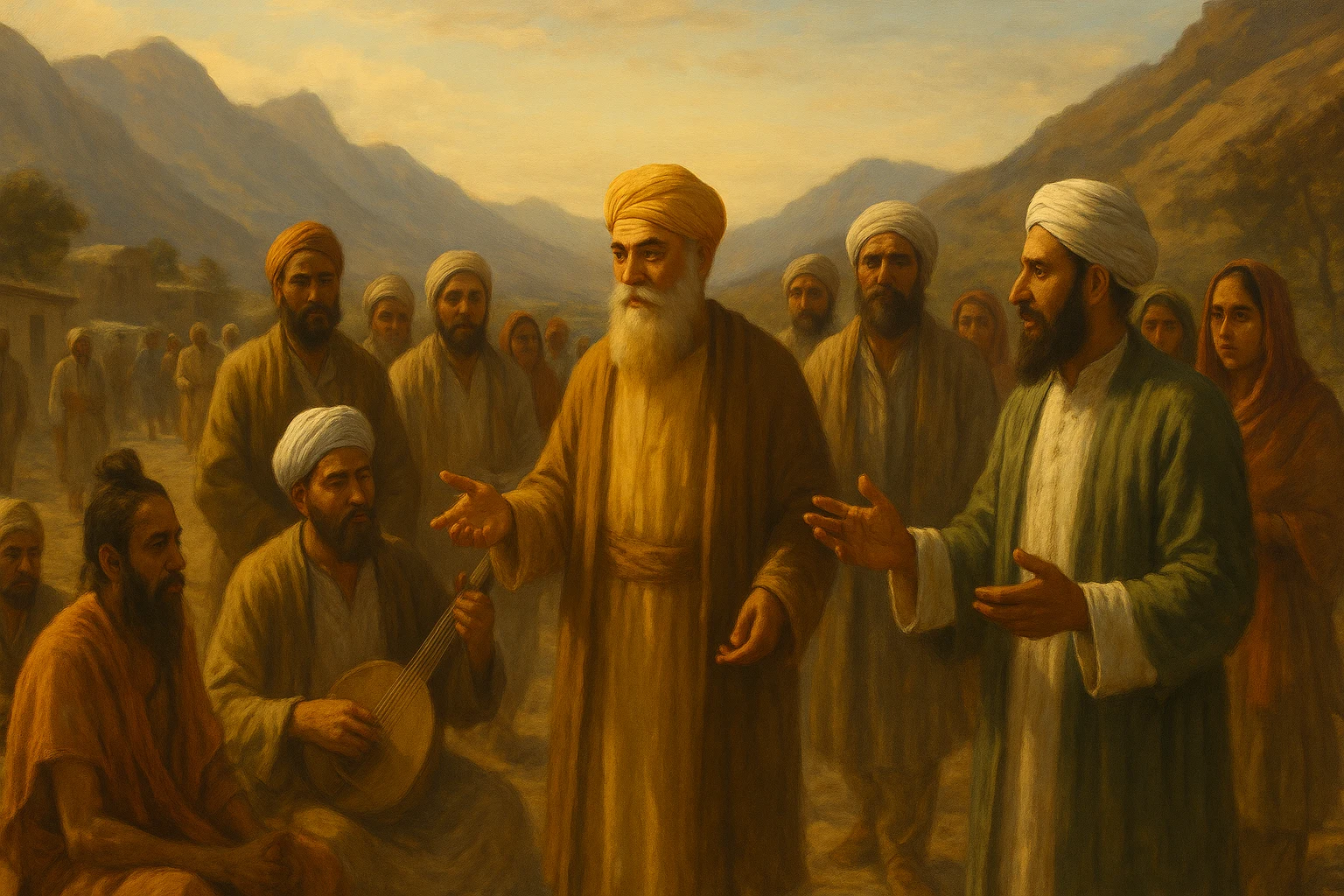
Guru Nanak traveled widely across India, Central Asia, and the Middle East. In each place, he engaged with rulers, saints, and common people, spreading the message of oneness and equality. His dialogues with spiritual leaders challenged exclusivist ideologies and promoted universality.
3. Critique of Ritualism
He condemned empty rituals that created division. For Guru Nanak, true spirituality lay in compassion, humility, and service, not in external practices.
Philosophical Foundations of Equality
- Ik Onkar – One Universal Creator
- If God is One, His creation cannot be divided into high and low.
- Naam Simran – Remembering God
- Spirituality unites, while discrimination divides.
- Hukam – Divine Order
- Every being is part of divine order, deserving respect.
- Seva – Selfless Service
- Service to humanity is service to God, irrespective of caste or creed.
Guru Nanak’s Impact on Society
1. Challenge to Social Hierarchies
By creating institutions like Langar and Sangat, Guru Nanak eroded caste barriers. His followers adopted egalitarian practices that reshaped social interactions.
2. Upliftment of Women
Women began participating in religious life, community services, and decision-making—challenging centuries of patriarchal domination.
3. A Model for Interfaith Harmony
Guru Nanak’s message bridged divides between Hindus and Muslims, focusing on shared values rather than differences.
4. Foundation of Sikhism as a Socially Just Faith
Sikhism emerged as a spiritual path intertwined with social justice. Later Sikh Gurus institutionalized this vision, making equality central to Sikh identity.
Relevance of Guru Nanak’s Vision Today
1. Caste Discrimination
Despite legal abolition, caste-based inequality persists in South Asia. Guru Nanak’s vision remains a call to end systemic discrimination.
2. Gender Inequality
From workplace bias to violence against women, gender inequality is global. Guru Nanak’s emphasis on dignity of women offers timeless guidance.
3. Religious Intolerance
In an era marked by polarization, his teaching of universal brotherhood urges interfaith dialogue and peaceful coexistence.
4. Economic Inequality
Kirat Karo (earn honestly) and Vand Chhako (share with others) resonate with modern concerns about wealth inequality and social justice.
5. Environmental Stewardship
Guru Nanak also emphasized harmony with nature, declaring air, water, and earth as sacred. His ecological vision aligns with today’s environmental challenges.
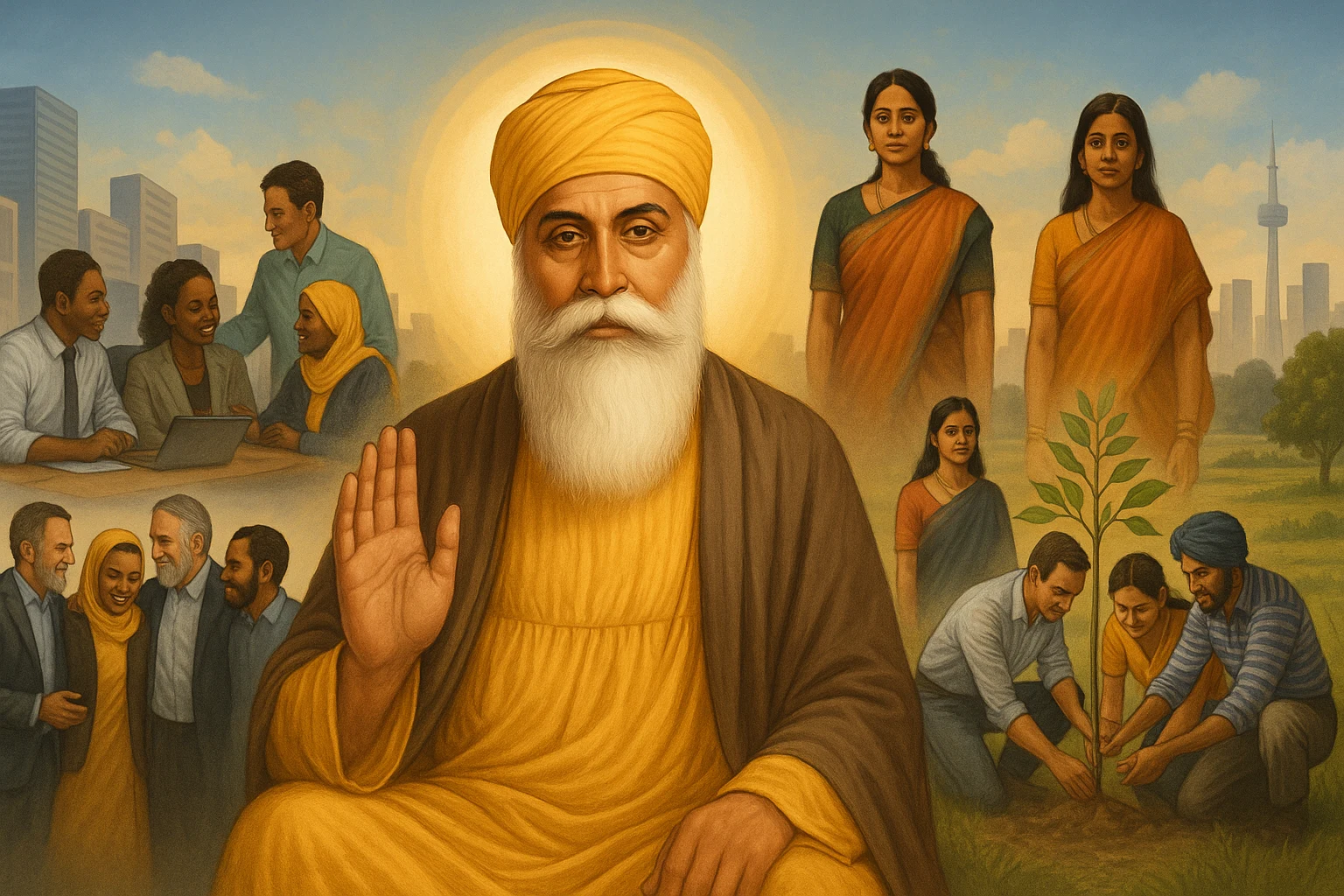
Stories and Anecdotes Illustrating Equality
- Sajjan Thug’s Transformation: Guru Nanak transformed a robber into a compassionate man by showing him that all are equal before God.
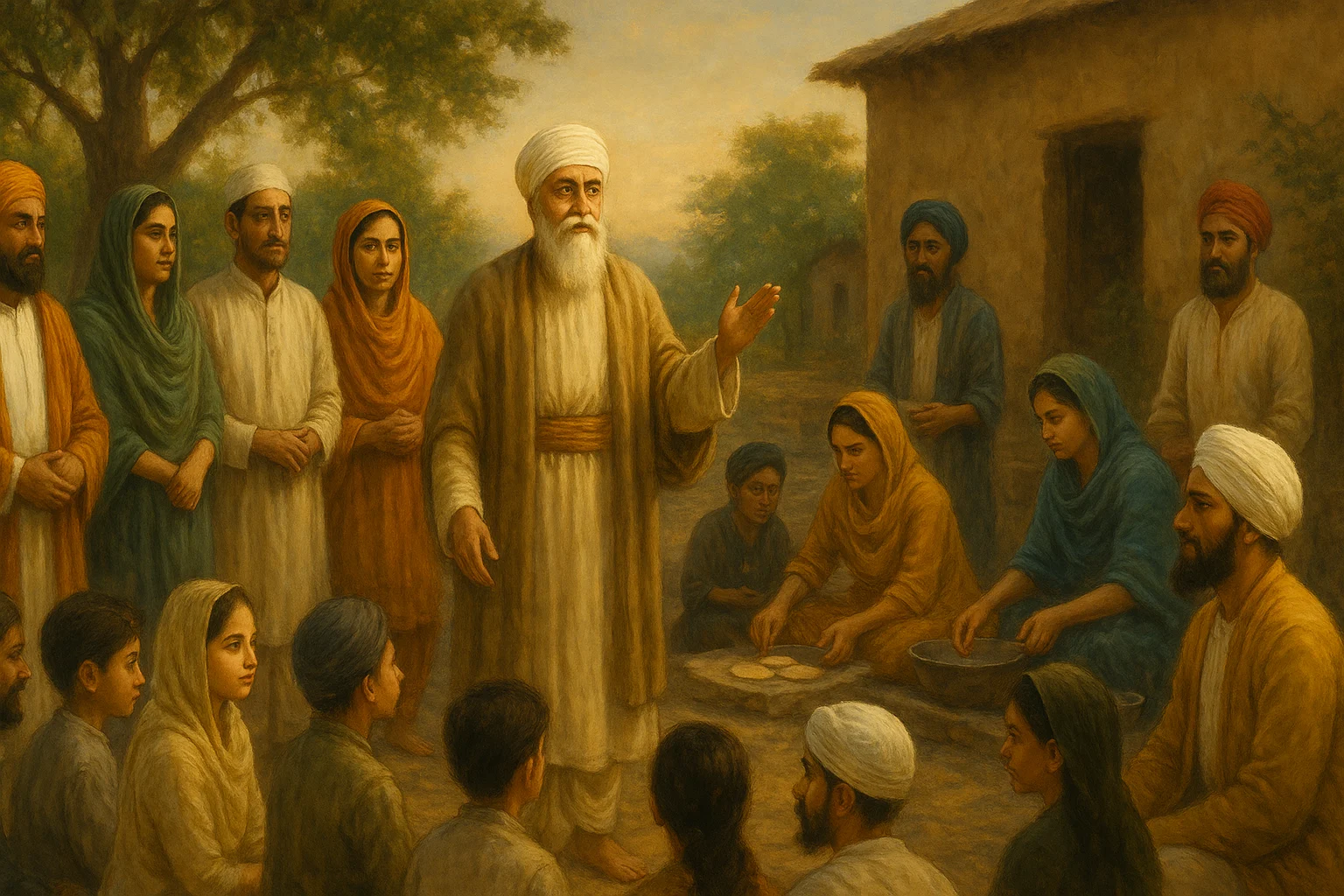
- Bhai Lalo vs Malik Bhago: He chose humble Bhai Lalo’s honest bread over Malik Bhago’s feast, teaching that purity of labor surpasses wealth or status.
- Dialogue with Babar: Guru Nanak confronted the Mughal emperor, reminding him of the suffering inflicted on common people—highlighting that power must serve justice.
Modern Applications
- Education: Incorporating Guru Nanak’s ideals into curriculums can promote tolerance and respect.
- Governance: Policies ensuring equal opportunities echo his egalitarian principles.
- Corporate World: Diversity and inclusion practices align with his emphasis on fairness.
- Civil Rights Movements: His teachings inspire movements against racism, casteism, and gender inequality.
Conclusion
Guru Nanak’s vision of equality was not confined to his era; it is a universal truth relevant across centuries and cultures. His insistence on the oneness of humanity, dignity of labor, respect for women, and rejection of caste-based discrimination laid the foundation for a society rooted in justice and compassion.
In today’s fragmented world, embracing his vision is not just a tribute to his legacy but a pathway to a more peaceful and equitable future.
Receive Stories and Articles in your Inbox!
We won’t send any promotional or spam emails.
