
Introduction
Janmashtami, also known as Krishna Janmashtami, Gokulashtami, or Sri Krishna Jayanti, is one of the most celebrated Hindu festivals, marking the divine birth of Lord Krishna, the eighth avatar of Lord Vishnu. It falls on the eighth day (Ashtami) of the dark fortnight in the month of Bhadrapada (August–September). For millions of devotees across India and the world, Janmashtami is not just a festival but a spiritual journey—a day of devotion, fasting, cultural festivities, and remembrance of Krishna’s timeless teachings from the Bhagavad Gita.
This article explores the rich traditions, rituals, stories, cultural practices, and modern-day celebrations of Janmashtami, while shedding light on its spiritual significance.
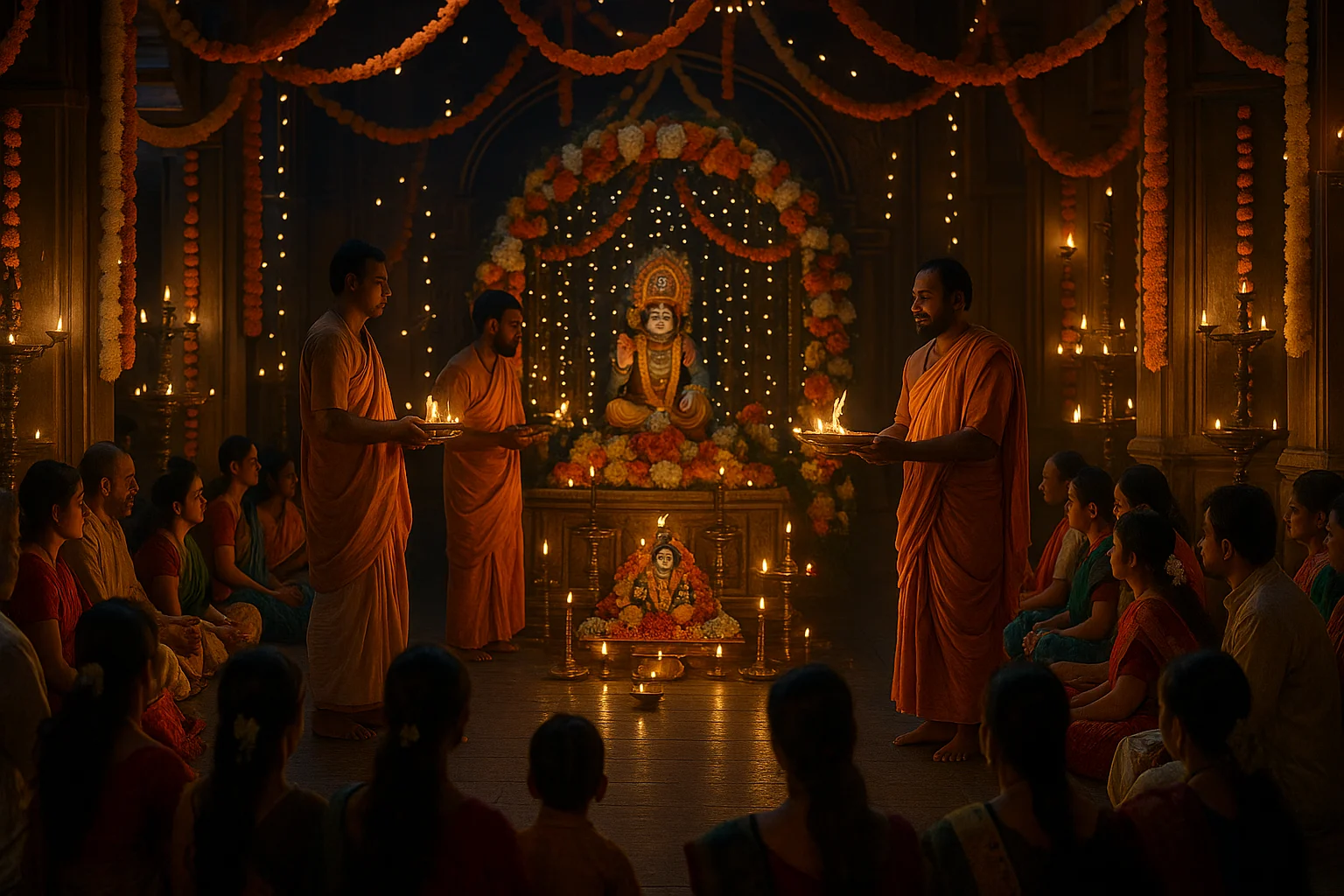
The Birth of Lord Krishna: Mythology and Significance
According to Hindu scriptures, Krishna was born in Mathura’s prison to Devaki and Vasudeva at midnight. His birth was a divine intervention to end the tyrannical rule of his uncle, King Kansa. The story is not just about the birth of a child but the emergence of dharma (righteousness) to vanquish adharma (evil).
This mythology forms the foundation of Janmashtami celebrations, with devotees symbolically reliving the moment of Krishna’s birth through rituals, songs, and midnight prayers.
Preparations for Janmashtami
1. Household Preparations
- Homes are cleaned and decorated with flowers, mango leaves, and rangoli.
- Small swings (jhulas) are decorated for baby Krishna idols.
- Devotees create cradles, adorn idols with new clothes, peacock feathers, and ornaments.
2. Temple Preparations
- Temples are adorned with garlands, lights, and colorful themes, often depicting scenes from Krishna’s childhood in Vrindavan.
- Priests prepare for elaborate pujas, bhajans, and enactments of Krishna Leela.

Fasting Traditions
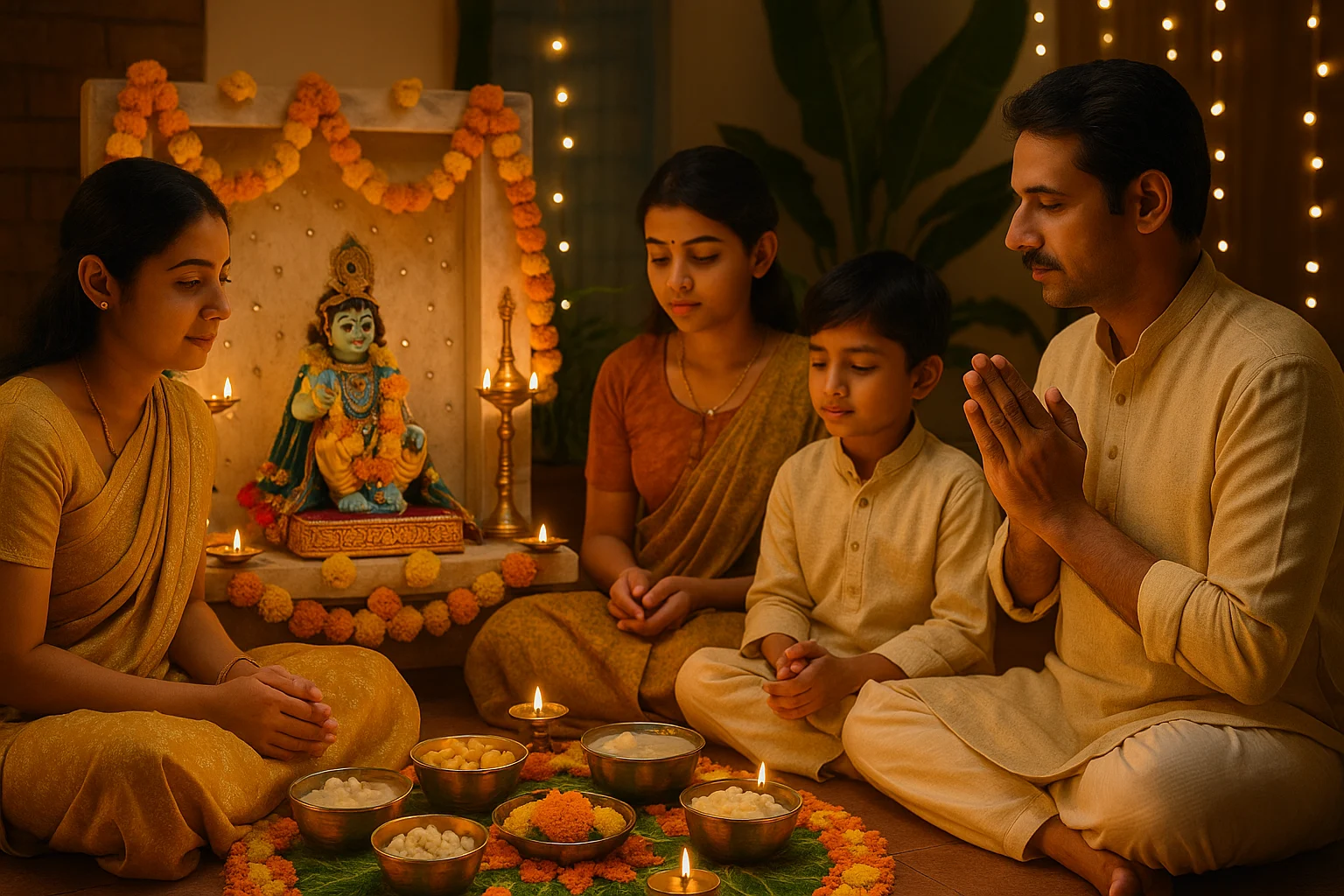
Fasting is central to Janmashtami. Devotees observe nirjala fast (without food or water) or phalahar fast (fruits and milk only). The fast is broken at midnight after Krishna’s birth ceremony (Janmotsav).

















Foods associated with Janmashtami include:
- Panchamrit: A mixture of milk, curd, ghee, honey, and sugar.
- Makhan (butter) and Mishri (sugar crystals): Symbolizing Krishna’s love for butter.
- Sattvic foods: Sabudana khichdi, fruits, and milk-based sweets.
Midnight Rituals
At midnight, devotees celebrate Krishna’s birth with joy:
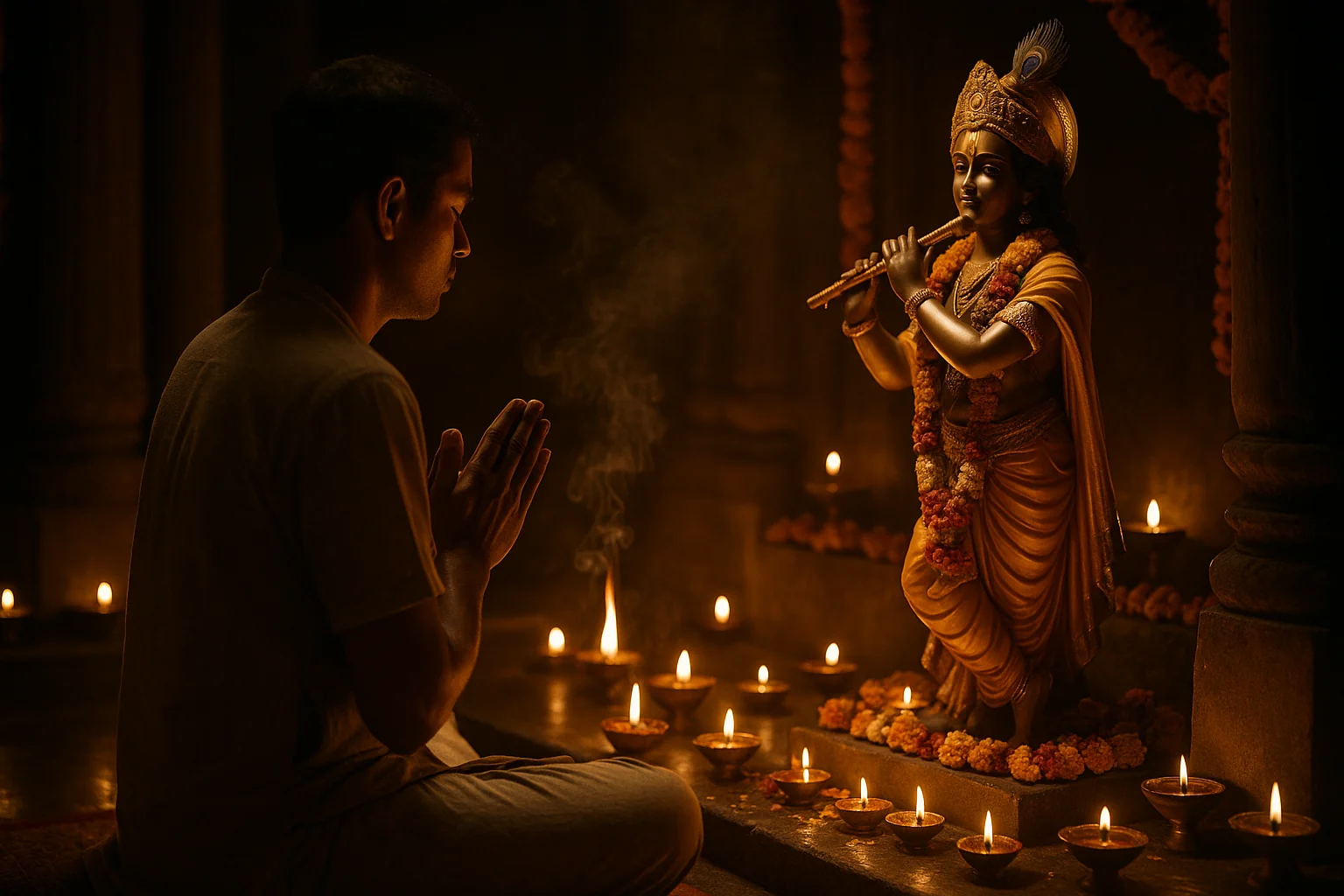
- The idol of baby Krishna is placed in a cradle.
- Devotees sing bhajans and chant “Hare Krishna, Hare Rama.”
- Conch shells are blown, and bells ring, marking the divine moment.
- Panchamrit abhishek (ritual bathing of the idol) is performed.
- Prasad is distributed to devotees after the puja.
Janmashtami Traditions Across India
1. Mathura and Vrindavan
- Mathura (Krishna’s birthplace) and Vrindavan (his childhood home) are epicenters of Janmashtami celebrations.
- Raslila dramas depict episodes of Krishna’s life.
- Thousands of devotees throng temples like Dwarkadhish and Banke Bihari.
2. Maharashtra – Dahi Handi
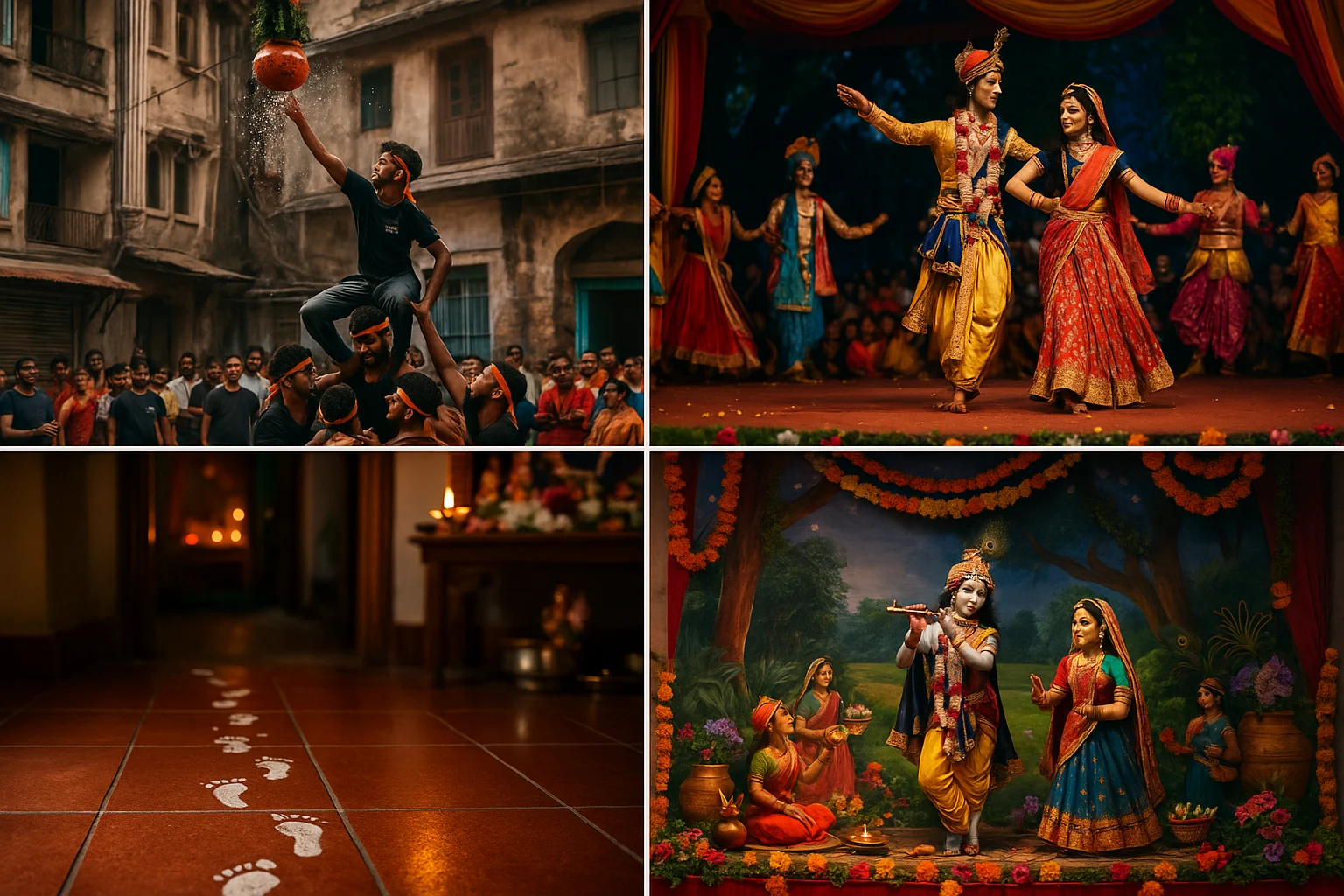
- Youth groups form human pyramids to break clay pots (handis) filled with curd, butter, or buttermilk, tied high above streets.
- This playful tradition recalls Krishna stealing butter with his friends, the “Makhan Chor” tales.
3. Gujarat and Dwarka
- Dwarka, Krishna’s kingdom, hosts grand temple festivities.
- Devotees decorate temples and sing bhajans all night.
4. South India
- In Tamil Nadu and Andhra Pradesh, tiny footprints of Krishna (made with rice flour paste) are drawn from the entrance to the puja room, symbolizing baby Krishna’s arrival.
- Devotional songs like “Krishna Bhajans” echo in homes.
5. North India
- In Delhi and Uttar Pradesh, “Jhankis” (dioramas) showcase Krishna’s life scenes.
- Cultural programs include bhajans, dances, and folk plays.
Cultural Practices and Festivities
- Raslila Performances: Theatrical enactments of Krishna’s childhood and youthful pastimes with Radha and the Gopis.
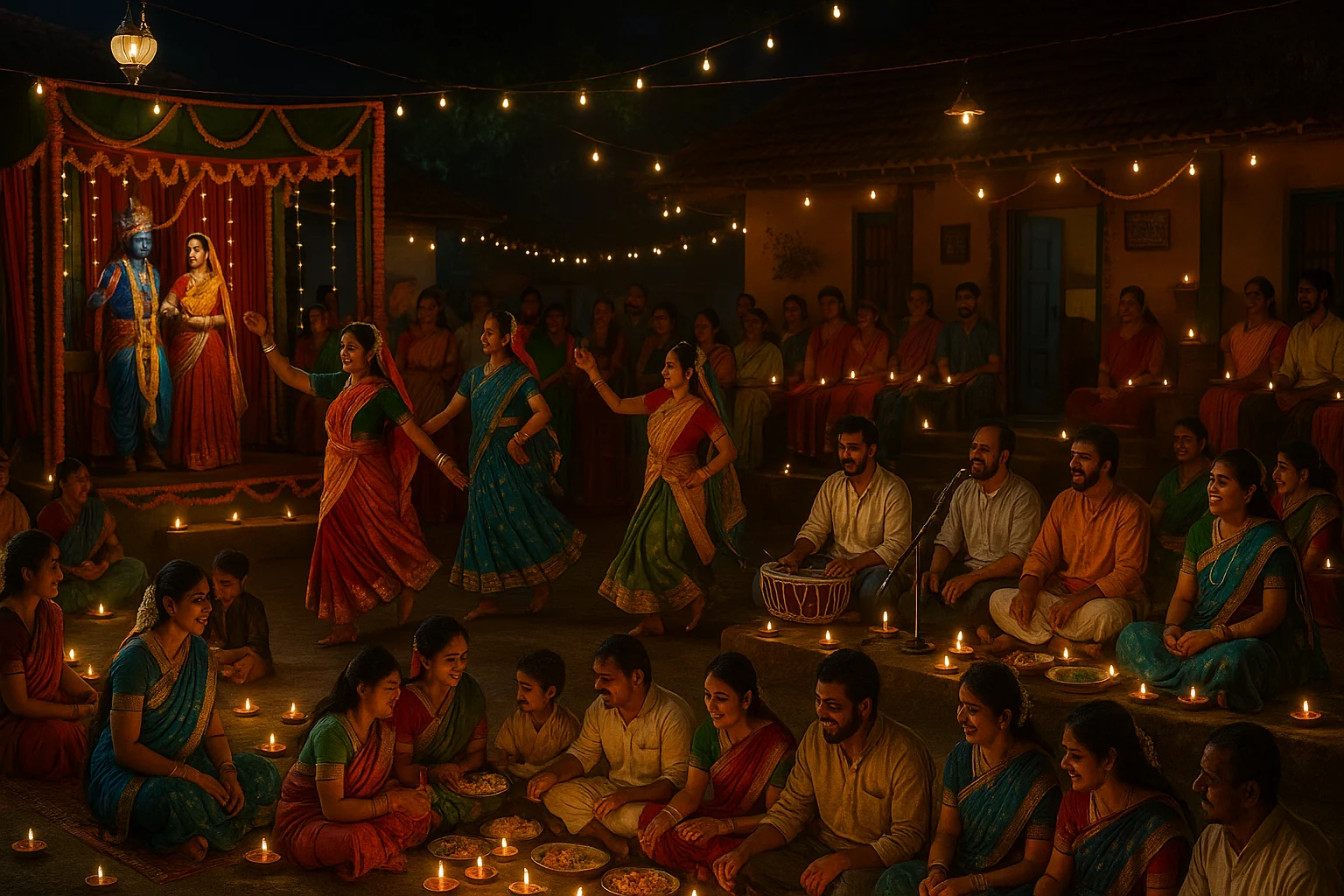
- Bhajan and Kirtan: Devotees sing devotional songs accompanied by mridangam, tabla, and harmonium.
- Dance and Drama: Traditional dances like Raas are performed in villages.
- Community Feasts: After fasting, communities organize Sattvic feasts, distributing prasad to the poor.
Global Celebrations
Janmashtami has transcended Indian borders:
- ISKCON Temples: Around the world, ISKCON (International Society for Krishna Consciousness) devotees celebrate with grandeur, attracting thousands.
- Nepal and Bangladesh: Krishna temples witness large gatherings.
- USA, UK, Canada: Cultural programs and temple events unite the diaspora.
Spiritual Significance of Janmashtami
- Victory of Good over Evil: Krishna’s birth symbolizes the destruction of tyranny and darkness.
- Bhakti (Devotion): The festival inspires surrender and love towards God.
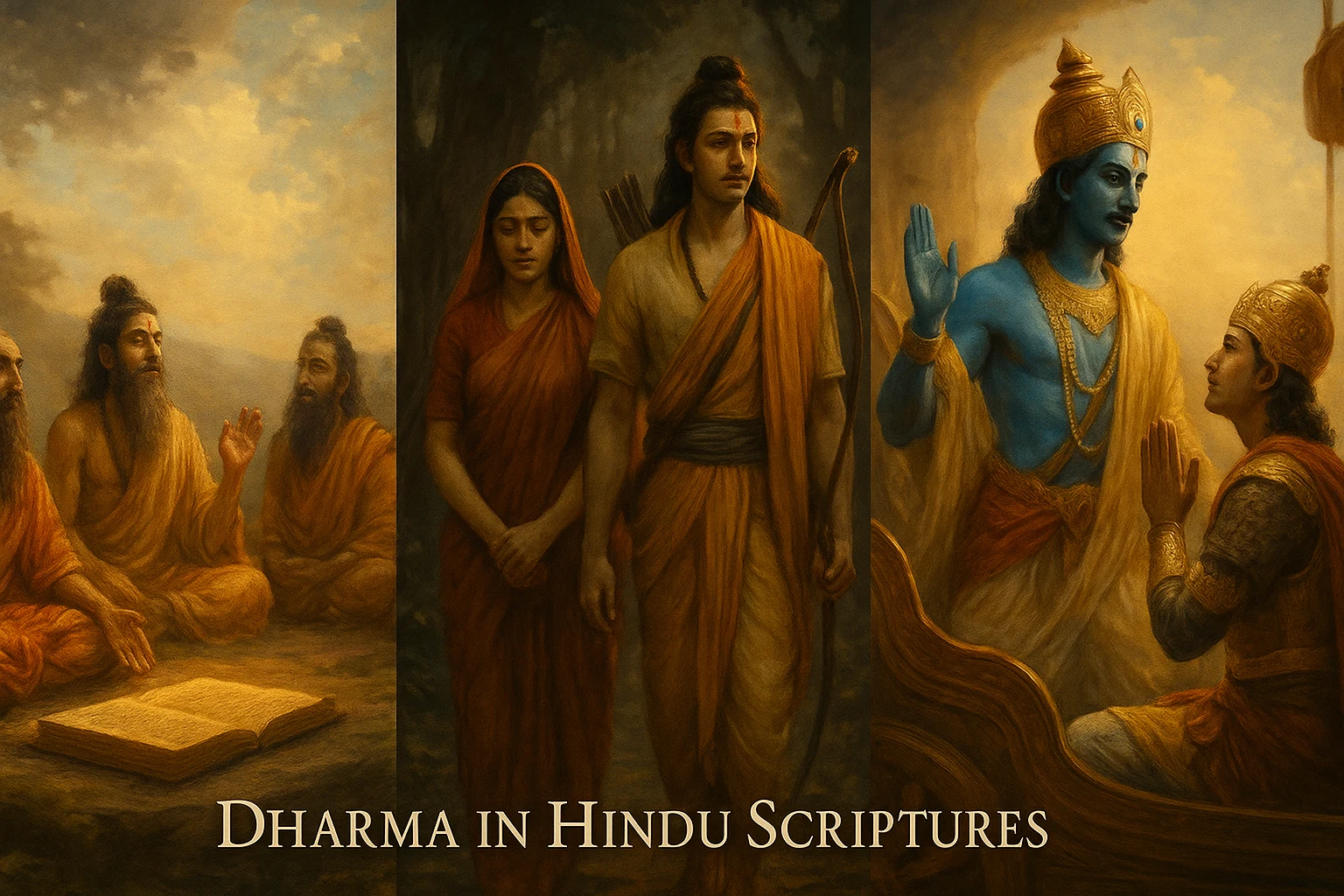
- Teachings of the Gita: Krishna’s wisdom about duty, selflessness, and faith guides devotees in modern life.
- Inner Celebration: Beyond rituals, Janmashtami reminds people to awaken Krishna’s qualities—compassion, humility, and truth—within themselves.
Modern-Day Adaptations
- Eco-Friendly Janmashtami: Use of clay idols instead of plastic, and organic decorations.
- Digital Celebrations: Live streaming of temple rituals and online bhajan sessions.
- Community Outreach: Charity events like food distribution, blood donation camps, and helping the needy in Krishna’s name.
Janmashtami and Children
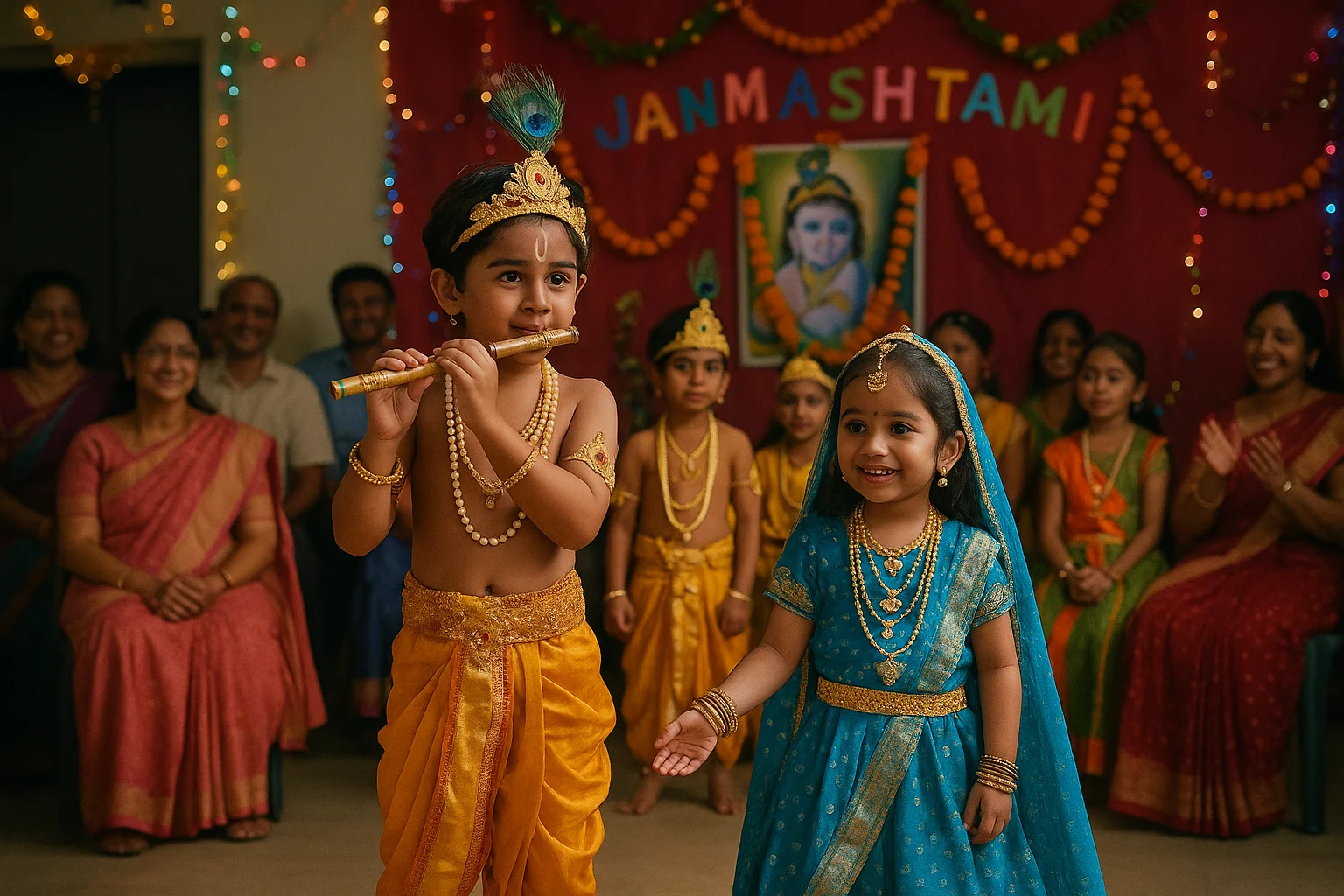
- Children dress as Krishna and Radha in fancy dress competitions.
- Schools narrate Krishna stories and organize skits.
- Parents teach values of truth, courage, and playfulness through Krishna’s childhood tales.
Conclusion
Janmashtami traditions are a blend of faith, culture, devotion, and joy. Whether through fasting, singing bhajans, participating in dahi handi, or simply meditating on Krishna’s teachings, devotees connect with the divine.
In every corner of India and in Hindu communities worldwide, Janmashtami revives the eternal message of Lord Krishna—that righteousness will always triumph over evil, and love is the purest path to God.
Receive Stories and Articles in your Inbox!
We won’t send any promotional or spam emails.
