
Introduction
Madhubani painting, also known as Mithila painting, is one of the most celebrated folk art traditions of India. Originating from the Mithila region of Bihar and Nepal, this art form is deeply rooted in cultural heritage, mythology, and social practices. With its distinctive geometric patterns, symbolic motifs, and natural colors, Madhubani has traveled from rural walls and courtyards to canvases, textiles, and global art galleries.
1. Origins of Madhubani Painting
The Mithila region (spanning northern Bihar and parts of Nepal) is regarded as the birthplace of Madhubani. The tradition is believed to date back more than 2500 years. According to legend, King Janaka commissioned local artists to decorate the walls during the wedding of his daughter Sita to Lord Rama. This historical and mythological association firmly connects Madhubani art to Hindu epics like the Ramayana.
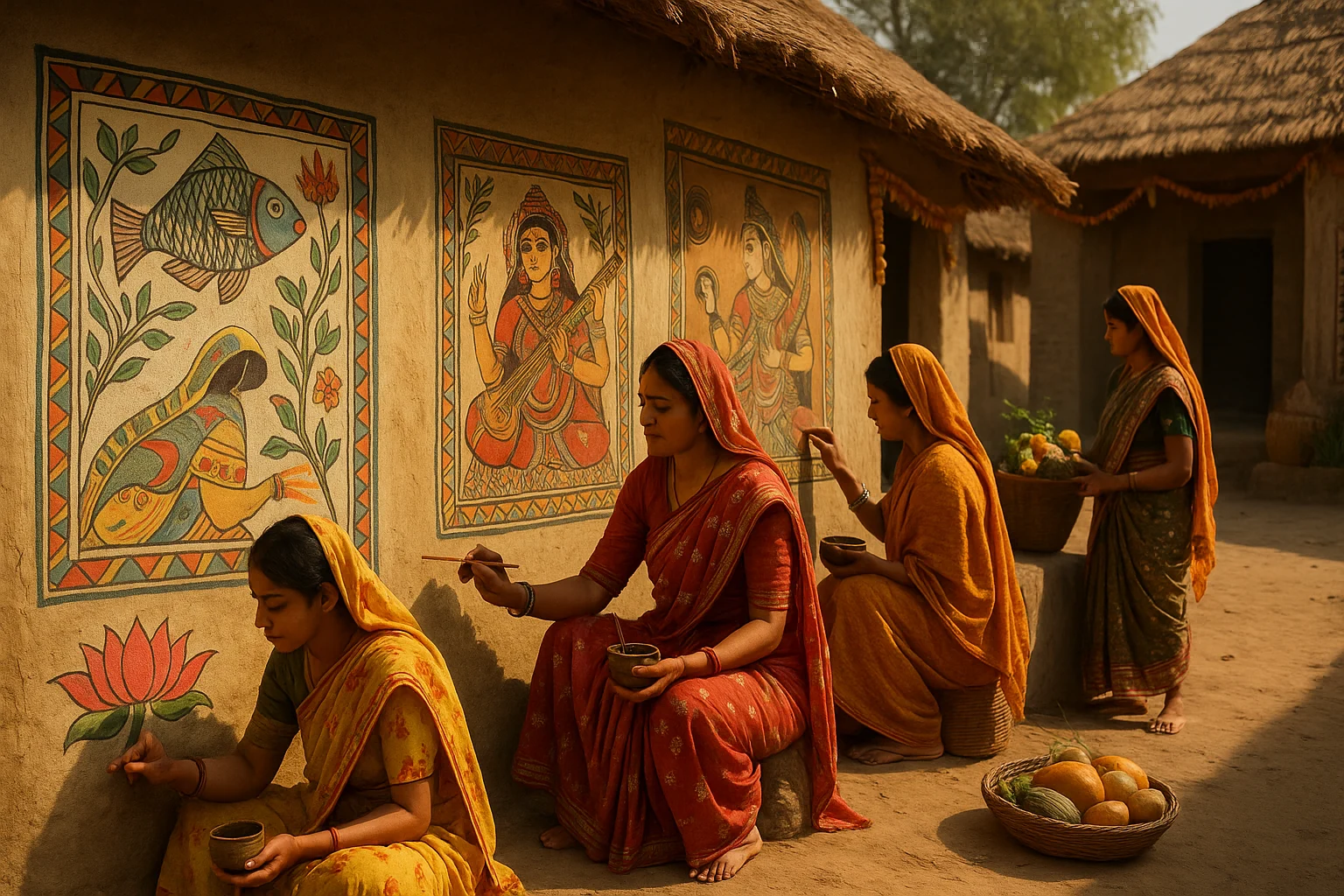
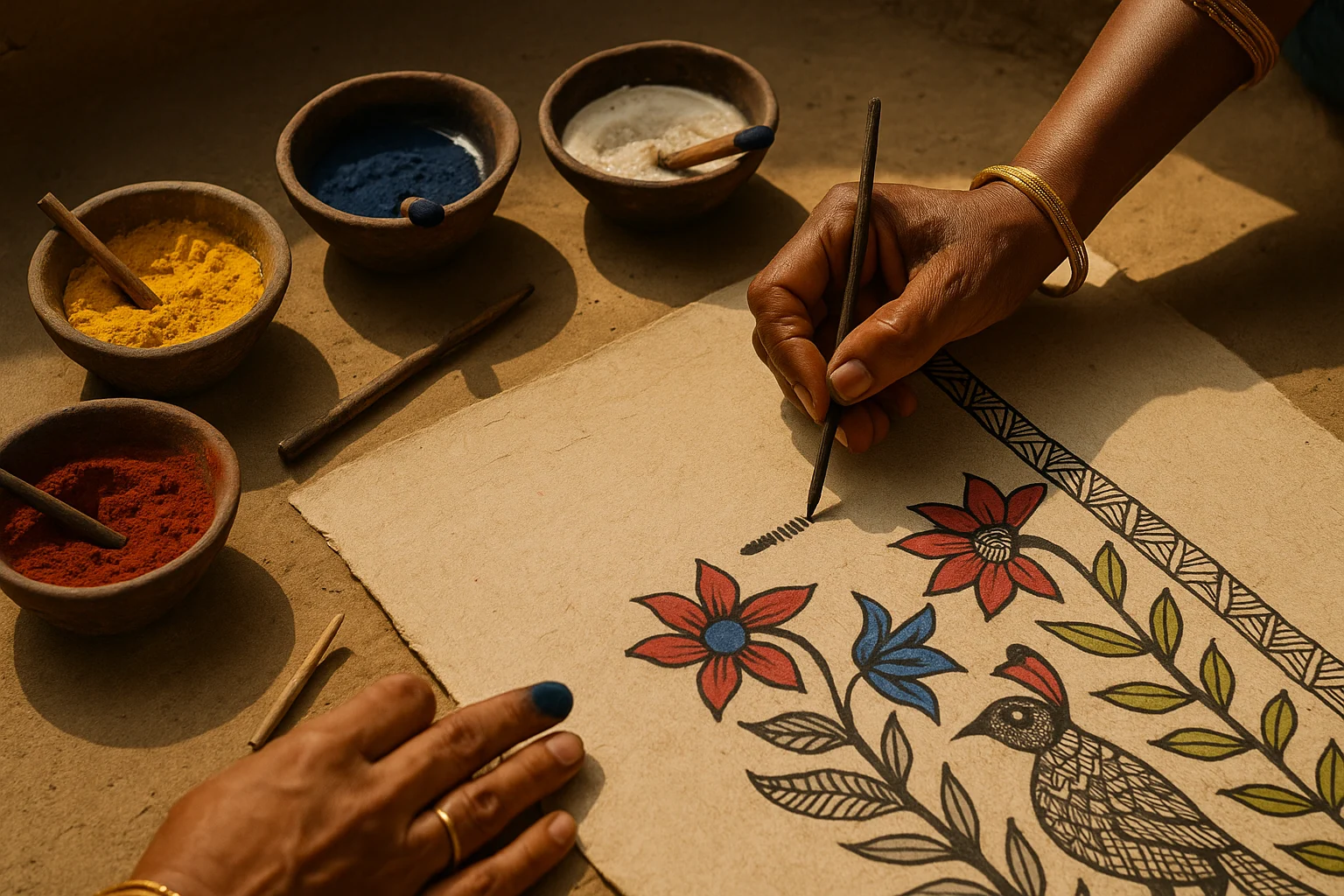
Originally, the paintings were made on the walls of mud huts using natural pigments and twigs, fingers, or matchsticks. They were part of ritual and community life, especially during weddings, festivals, and harvest celebrations.
2. Styles of Madhubani Painting
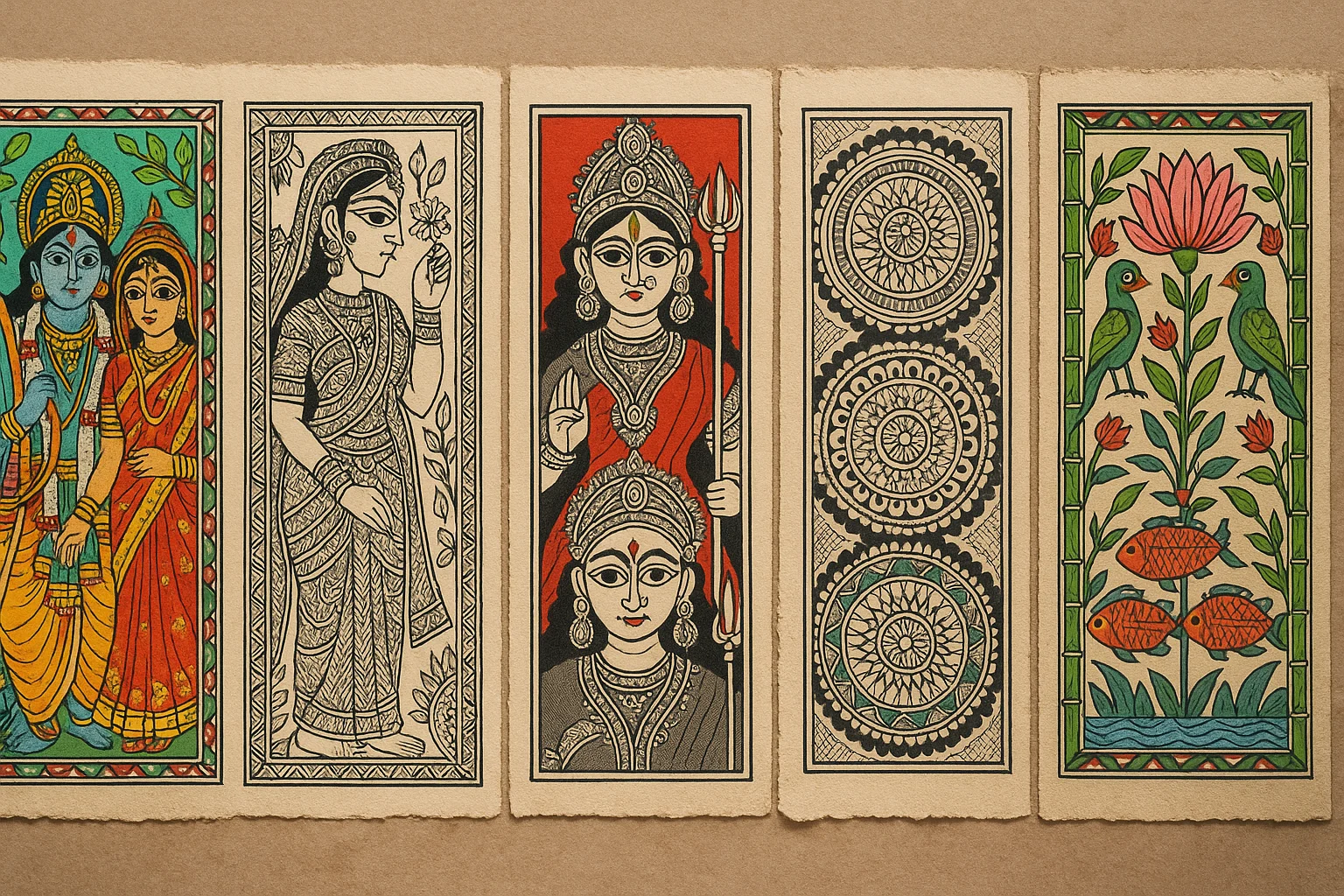
Madhubani is not a monolithic style. Over centuries, it has evolved into five distinct styles, each with unique features:
- Bharni Style – Known for bold outlines filled with vibrant colors. Traditionally used by Brahmin women, it often depicts gods, goddesses, and religious themes.
- Katchni Style – Recognized for its intricate line work and patterns with minimal use of color.
- Tantrik Style – Deeply symbolic, often showcasing deities like Kali, Durga, and other tantric iconography.
- Godna Style – Inspired by tattoo patterns, it uses repetitive motifs and is largely monochromatic.
- Kohbar Style – Associated with wedding rituals, depicting fertility symbols like lotus, bamboo, parrots, and fish.
3. Techniques and Materials
Traditionally, Madhubani paintings used natural and eco-friendly materials:
































- Base: Mud-coated walls, handmade paper, or cloth.
- Brushes: Fingers, twigs, and matchsticks instead of commercial brushes.
- Colors: Extracted from natural sources – turmeric (yellow), indigo (blue), kusum flower (red), rice paste (white), and soot (black).
- Binder: Cow dung and mud for wall preparation, and goat’s milk or gum Arabic to fix colors.
The two-dimensional quality, absence of empty space, and the use of double lines with fine cross-hatching give Madhubani its distinct identity.
4. Themes and Symbolism
The art form is deeply symbolic. Some recurring motifs include:
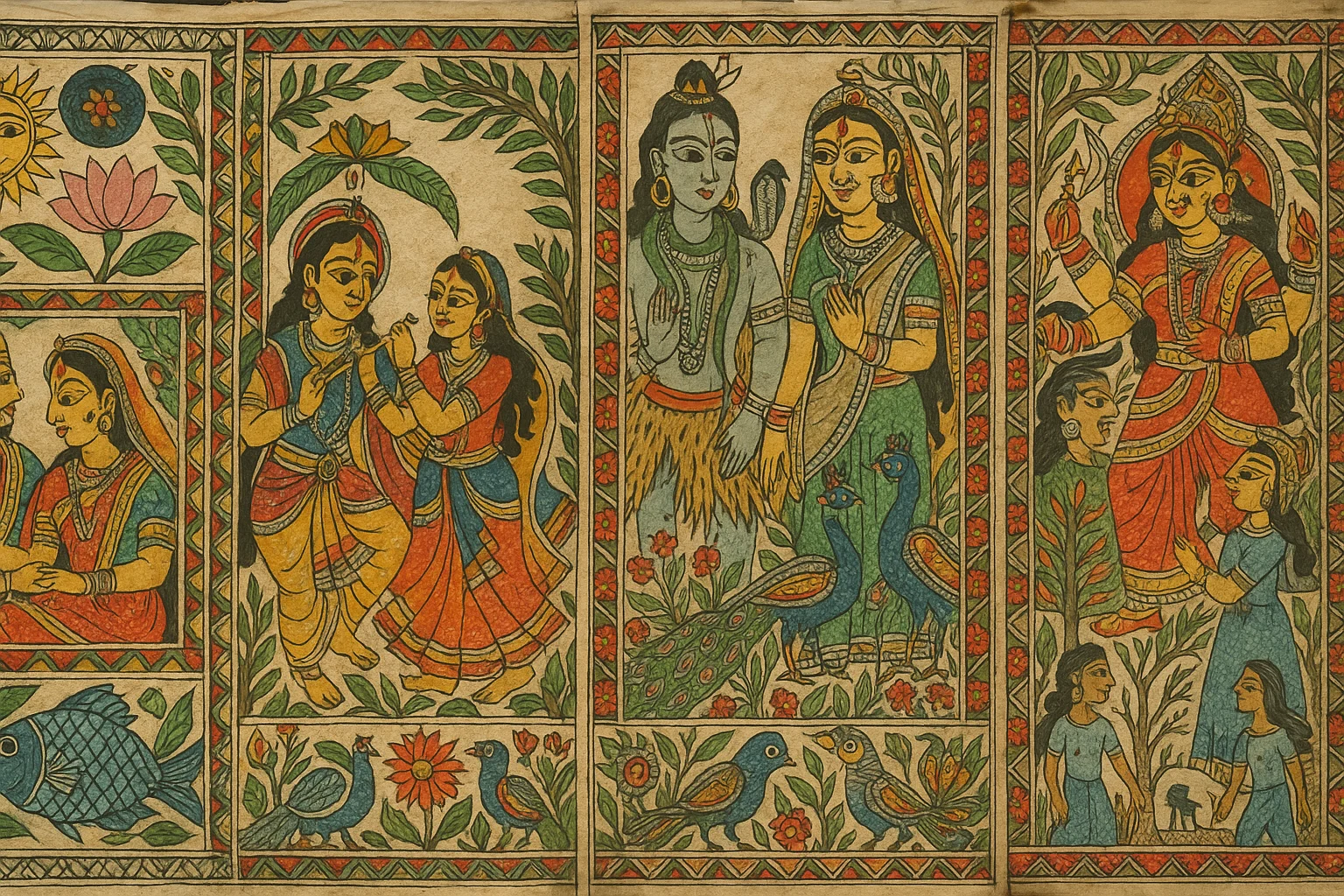
- Religious & Mythological: Rama-Sita wedding, Krishna with gopis, Shiva-Parvati, Durga slaying Mahishasura.
- Nature & Fertility: Sun, moon, bamboo groves, fish (prosperity), peacocks (love), lotus (fertility).
- Tantric Themes: Goddess Kali, yantras, tantric symbols.
- Social Commentary: Modern Madhubani artists also highlight themes like women empowerment, deforestation, and climate change.
5. Role of Women in Madhubani Art
Madhubani is often referred to as “women’s art” since village women traditionally practiced it as part of household and community rituals. Passed down from mothers to daughters, it became an oral and visual heritage system. However, men began participating once the art moved into the commercial domain in the mid-20th century.
6. Revival and Global Recognition
In the 1960s, a severe drought in Bihar prompted the Government of India and NGOs to promote Madhubani painting on paper and canvas as a means of livelihood. This step revived and transformed it into a recognized art form.
Today, Madhubani paintings are showcased in international galleries, fashion, and home décor. Global recognition came when institutions like the Mithila Museum in Japan and UNESCO exhibitions featured Madhubani artists.
Notable Madhubani artists include:
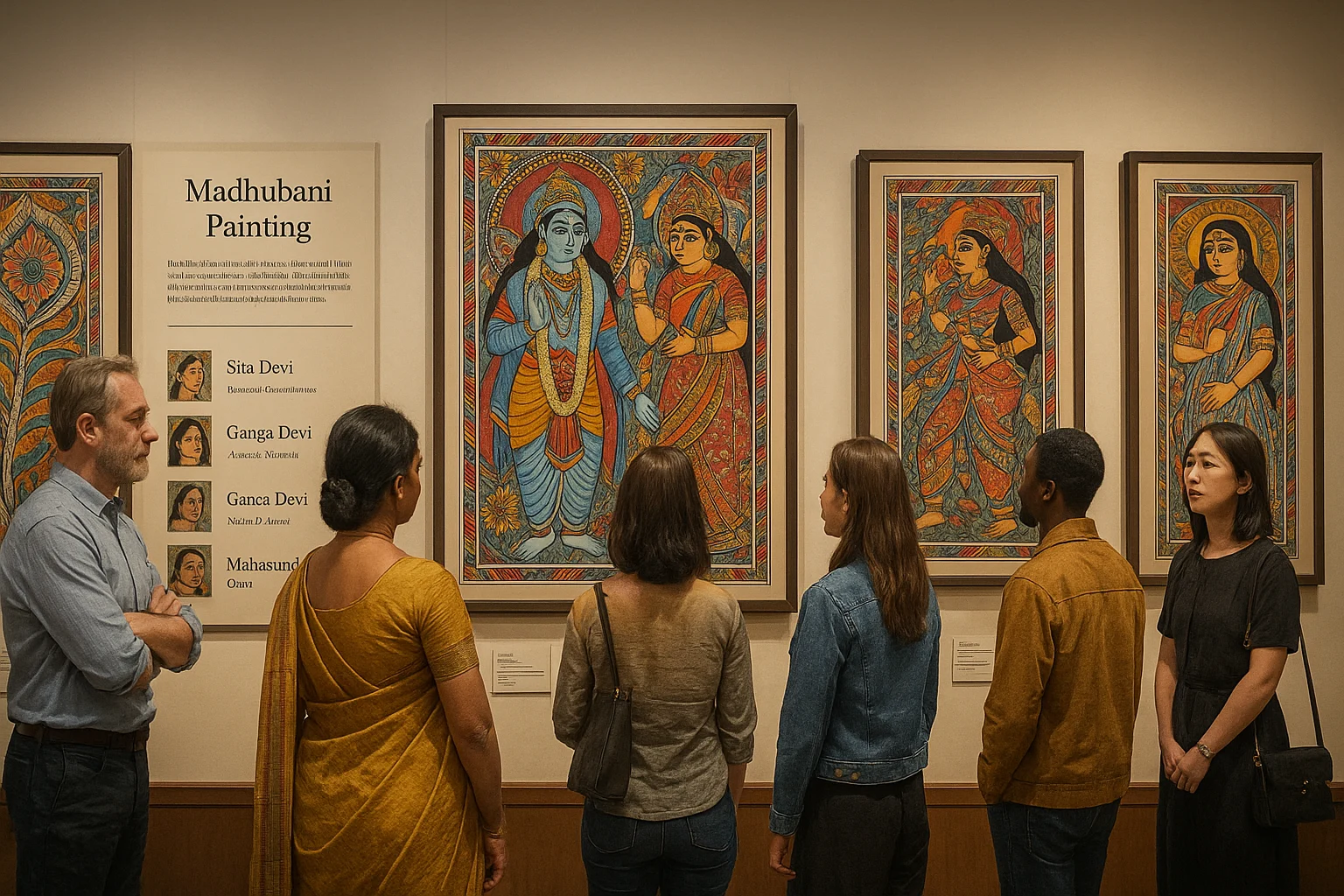
- Sita Devi – Awarded Padma Shri in 1981.
- Ganga Devi – Awarded Padma Shri in 1984, known for incorporating contemporary themes.
- Mahasundari Devi – National Award winner.
7. Madhubani in Contemporary Times
Modern Madhubani has adapted to various mediums:
- Canvas & Paper Artworks – Sold globally.
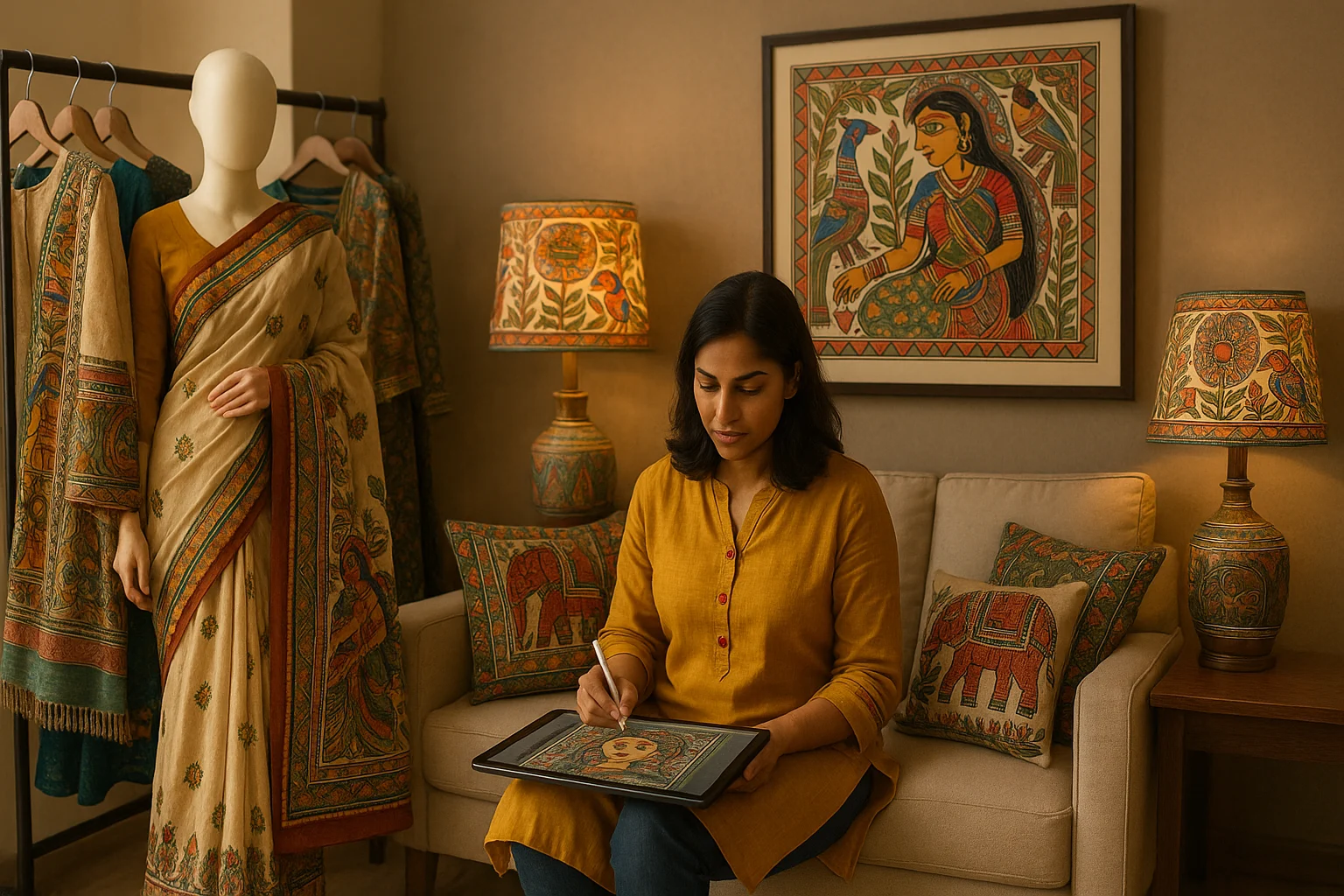
- Textiles & Apparel – Sarees, dupattas, stoles, kurtas featuring Madhubani motifs.
- Home Décor – Wall hangings, lamps, cushion covers.
- Digital & Global Art – Artists now use Madhubani patterns in digital illustrations, NFTs, and international collaborations.
At the same time, it faces challenges such as over-commercialization, imitation by machine prints, and lack of financial support for traditional artists.
8. Cultural and Spiritual Significance
Madhubani paintings are not merely decorative. They serve as ritualistic art linked to life-cycle ceremonies, agricultural prosperity, and community bonding. The use of natural elements represents harmony with nature, while mythological depictions reinforce spiritual devotion.
In essence, Madhubani reflects the soul of Mithila’s cultural identity.
9. Global Appeal and Sustainable Future
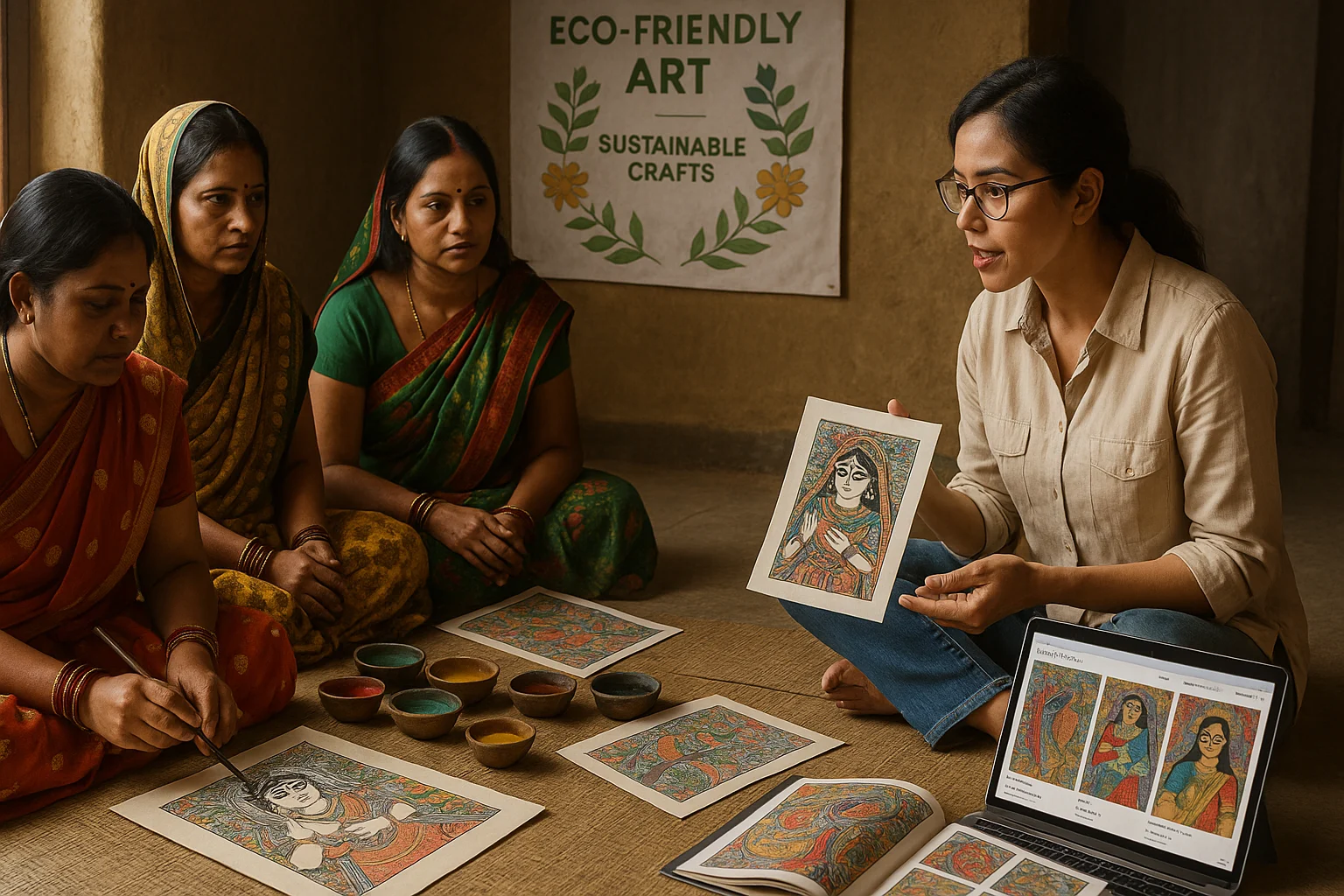
The demand for Madhubani in the global market is rising due to its eco-friendly materials and unique cultural storytelling. With conscious consumerism on the rise, Madhubani aligns with the sustainability movement. NGOs and cultural organizations continue to empower rural women by training them in Madhubani and connecting them with markets worldwide.
10. Conclusion
The Madhubani painting tradition stands as a bridge between the past and the present. From being ritual wall paintings in rural Bihar to gaining international recognition as a heritage art form, it embodies resilience, cultural pride, and creativity.
Its survival and growth are a testament to the power of folk traditions to adapt and thrive while preserving their authenticity and symbolism. For India, Madhubani is not just art – it is a living cultural legacy.
Receive Stories and Articles in your Inbox!
We won’t send any promotional or spam emails.
